Provisional attachment of laundered funds and equivalent-value property sustained, with statutory protection limited to pension, gratuity and providen...
Insolvency moratorium does not shield company officers from cheque dishonour prosecution for liability arising before corporate insolvency proceedings...
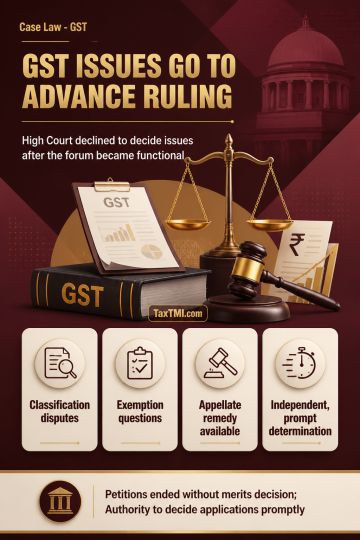
Advance-ruling mechanism governs pending GST classification, exemption and taxability disputes, limiting writ review once the specialised forum functi...
Interest merged into a decree and payable in execution retains the character of a judgment debt, so the judgment debtor cannot deduct tax at source from the decretal interest unless the decree itself authorises such deduction. The court applied the principle that a decree must be executed as it stands, subject only to adjustments permitted under the Civil Procedure Code, and held that section 195 did not extend to a decretal debt. The deduction already made toward TDS was therefore upheld, and the challenge failed.
Interest merged into a decree and payable in execution retains the character of a judgment debt, so the judgment debtor cannot deduct tax at source from the decretal interest unless the decree itself authorises such deduction. The court applied the principle that a decree must be executed as it stands, subject only to adjustments permitted under the Civil Procedure Code, and held that section 195 did not extend to a decretal debt. The deduction already made toward TDS was therefore upheld, and the challenge failed.
Note: It is a system-generated summary and is for quick reference only.
 TaxTMI
 of 4803


















 Join Channel


 TaxTMI
