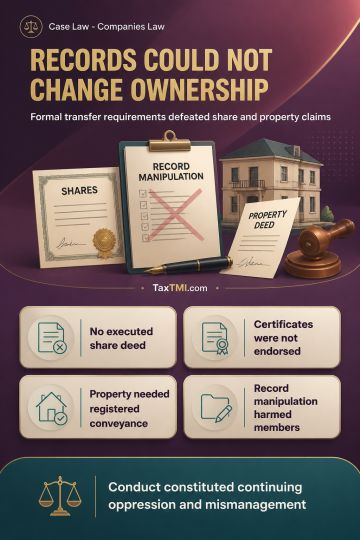
Statutory transfer formalities invalidated alleged share and property transfers, while retrospective record manipulation constituted oppression and mi...
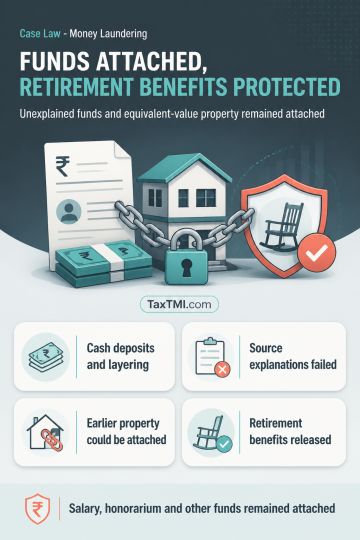
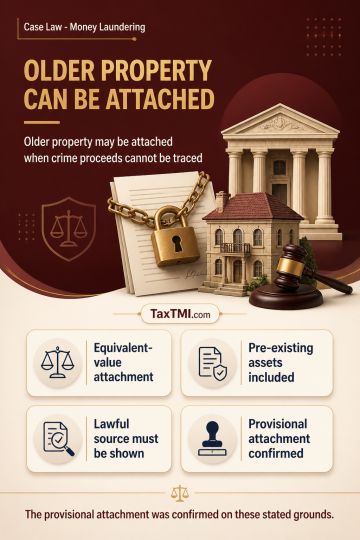
Provisional attachment of laundered funds and equivalent-value property sustained, with statutory protection limited to pension, gratuity and providen...
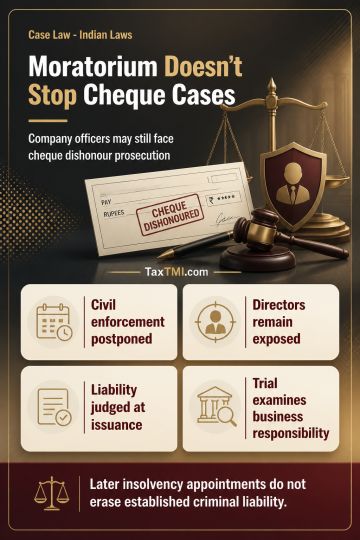
Insolvency moratorium does not shield company officers from cheque dishonour prosecution for liability arising before corporate insolvency proceedings...
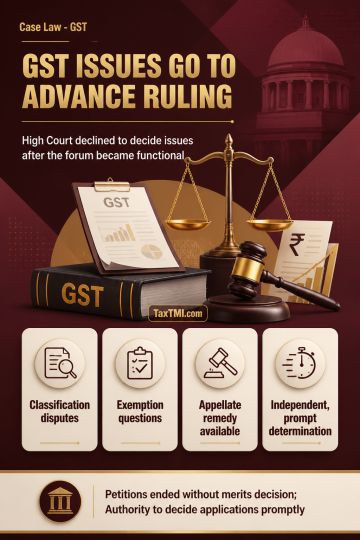
Advance-ruling mechanism governs pending GST classification, exemption and taxability disputes, limiting writ review once the specialised forum functi...
Page of 4805
Press 'Enter' after typing page number.
921 to 940 of 96092 Results
❮
❯
❯❯
0 / 200
Expand Note
Add to Folder
No Folders have been created
+
Are you sure you want to delete "My most important" ?
GST assessment orders concerning short payment of tax and alleged non-payment on seigniorage fees under reverse charge mechanism were remitted for fresh adjudication. On the short-reported turnover issue, the impugned orders were treated as an addendum to the show cause notices, and the taxpayer was required to deposit 25% of the disputed tax and file separate replies with supporting documents before fresh merits-based orders were passed. On the seigniorage-fee issue, substantive taxability was not decided; instead, the matter was deferred, a 10% deposit and replies were required, and separate orders were directed only after the Supreme Court resolves the reverse charge taxability question, leaving that controversy open.
GST assessment orders concerning short payment of tax and alleged non-payment on seigniorage fees under reverse charge mechanism were remitted for fresh adjudication. On the short-reported turnover issue, the impugned orders were treated as an addendum to the show cause notices, and the taxpayer was required to deposit 25% of the disputed tax and file separate replies with supporting documents before fresh merits-based orders were passed. On the seigniorage-fee issue, substantive taxability was not decided; instead, the matter was deferred, a 10% deposit and replies were required, and separate orders were directed only after the Supreme Court resolves the reverse charge taxability question, leaving that controversy open.
Note: It is a system-generated summary and is for quick reference only.
 TaxTMI
 of 4805




 Join Channel


 TaxTMI