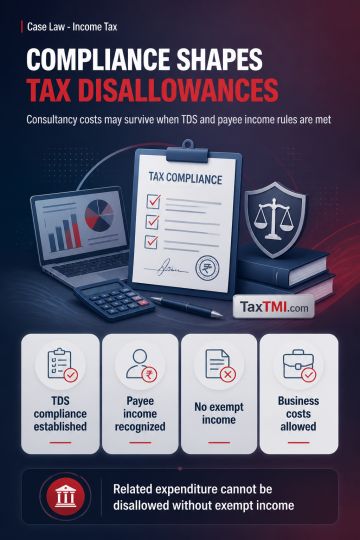
Tax deduction compliance and payee income recognition govern consultancy disallowance, while no exempt income prevents related expenditure disallowanc...
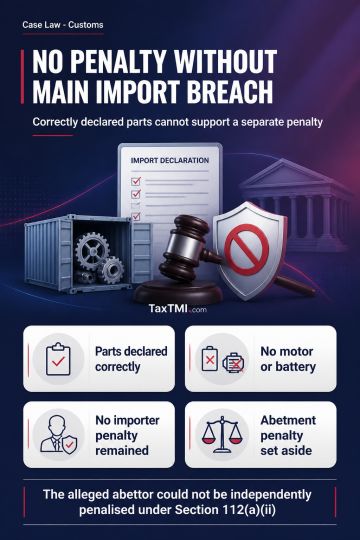
Derivative abetment liability fails when correctly declared imported components establish no underlying improper importation by the principal importer...
Page of 4805
Press 'Enter' after typing page number.
701 to 720 of 96100 Results
❮
❯
❯❯
0 / 200
Expand Note
Add to Folder
No Folders have been created
+
Are you sure you want to delete "My most important" ?
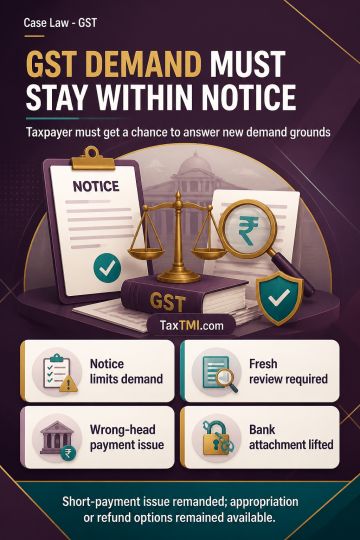
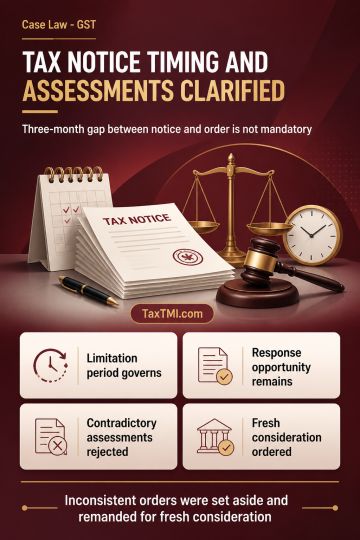
GST assessment orders concerning short payment of tax and alleged non-payment on seigniorage fees under reverse charge mechanism were remitted for fresh adjudication. On the short-reported turnover issue, the impugned orders were treated as an addendum to the show cause notices, and the taxpayer was required to deposit 25% of the disputed tax and file separate replies with supporting documents before fresh merits-based orders were passed. On the seigniorage-fee issue, substantive taxability was not decided; instead, the matter was deferred, a 10% deposit and replies were required, and separate orders were directed only after the Supreme Court resolves the reverse charge taxability question, leaving that controversy open.
GST assessment orders concerning short payment of tax and alleged non-payment on seigniorage fees under reverse charge mechanism were remitted for fresh adjudication. On the short-reported turnover issue, the impugned orders were treated as an addendum to the show cause notices, and the taxpayer was required to deposit 25% of the disputed tax and file separate replies with supporting documents before fresh merits-based orders were passed. On the seigniorage-fee issue, substantive taxability was not decided; instead, the matter was deferred, a 10% deposit and replies were required, and separate orders were directed only after the Supreme Court resolves the reverse charge taxability question, leaving that controversy open.
Note: It is a system-generated summary and is for quick reference only.
 TaxTMI
 of 4805









 Join Channel


 TaxTMI