Statutory transfer formalities invalidated alleged share and property transfers, while retrospective record manipulation constituted oppression and mi...
Provisional attachment of laundered funds and equivalent-value property sustained, with statutory protection limited to pension, gratuity and providen...
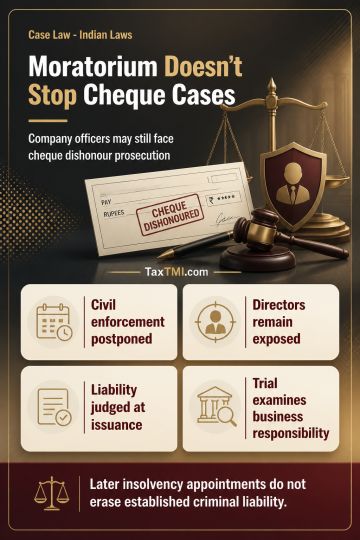
Insolvency moratorium does not shield company officers from cheque dishonour prosecution for liability arising before corporate insolvency proceedings...
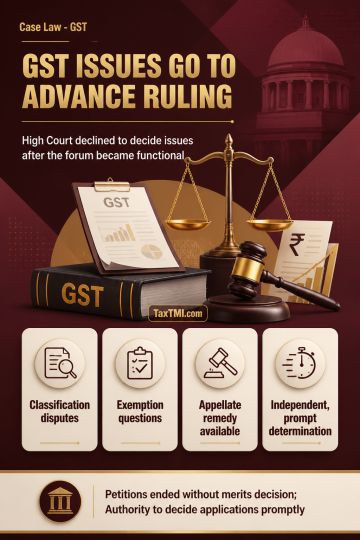
Advance-ruling mechanism governs pending GST classification, exemption and taxability disputes, limiting writ review once the specialised forum functi...
Page of 4805
Press 'Enter' after typing page number.
921 to 940 of 96092 Results
❮
❯
❯❯
0 / 200
Expand Note
Add to Folder
No Folders have been created
+
Are you sure you want to delete "My most important" ?
Payments to a non-resident under a Production Sharing Contract were treated as taxable unless the claimed reimbursement was supported by item-wise expenditure particulars and, where necessary, a chargeable proportion determination under the withholding regime. The arm's length clause did not create a presumption that every reimbursement was non-taxable. Because the assessee had filed only a consolidated reimbursement claim without furnishing details or seeking determination of the chargeable portion, tax at source was required and liability under the deeming provisions was upheld. The alternative double taxation relief argument failed because, for the relevant years, relief applied only to agreements with foreign Governments, not the private consortium arrangement.
Payments to a non-resident under a Production Sharing Contract were treated as taxable unless the claimed reimbursement was supported by item-wise expenditure particulars and, where necessary, a chargeable proportion determination under the withholding regime. The arm's length clause did not create a presumption that every reimbursement was non-taxable. Because the assessee had filed only a consolidated reimbursement claim without furnishing details or seeking determination of the chargeable portion, tax at source was required and liability under the deeming provisions was upheld. The alternative double taxation relief argument failed because, for the relevant years, relief applied only to agreements with foreign Governments, not the private consortium arrangement.
Note: It is a system-generated summary and is for quick reference only.
 TaxTMI
 of 4805










 Join Channel


 TaxTMI