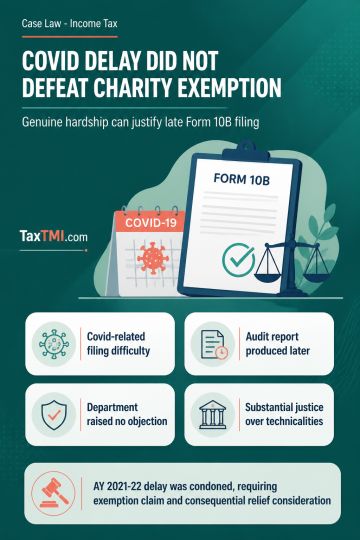
Belated Form 10B filing during Covid-19 cannot defeat charitable exemption where genuine hardship warrants condonation and substantial justice prevail...
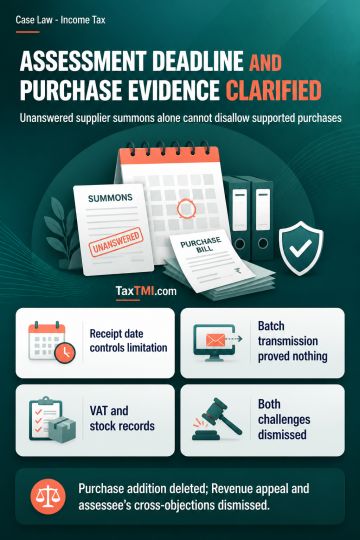
Limitation for consequential assessments runs from prescribed authority receipt, while verified purchases cannot be disallowed merely for unanswered s...
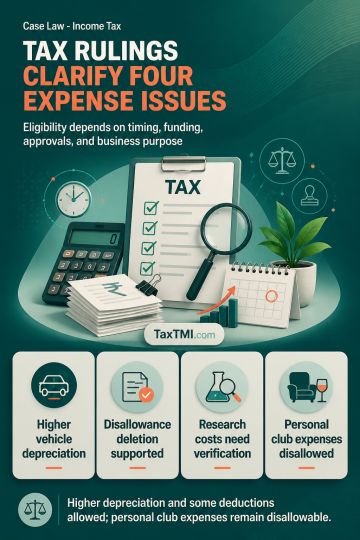
Higher depreciation for qualifying commercial vehicles, exempt-income disallowance, research deduction verification, and club-expense treatment clarif...
Charitable registration renewal cannot become an assessment of receipts, profitability or annual exemption compliance, requiring renewal and donation ...
AMP expenditure for own business is not an international transaction without an associated-enterprise arrangement, eliminating transfer pricing adjust...
Page of 4809
Press 'Enter' after typing page number.
141 to 160 of 96177 Results
❮
❯
❯❯
0 / 200
Expand Note
Add to Folder
No Folders have been created
+
Are you sure you want to delete "My most important" ?
A customs exemption under Notification No. 24/2005-Cus, entry 13S, could not be denied merely because the importer did not follow the IGCR procedural requirements or furnish the prescribed undertaking, where the record showed the goods were only traded and not used in manufacture of excluded products. The Tribunal treated the exemption condition as aimed at preventing such manufacture and held that its substantive purpose was satisfied on the facts, so denial of exemption was unsustainable. It also rejected the objection that the adjudicating authority had travelled beyond the show cause notice, since the condition was reproduced there and the importer had put the exemption entry in issue. The duty demand, interest and penalty were set aside.
A customs exemption under Notification No. 24/2005-Cus, entry 13S, could not be denied merely because the importer did not follow the IGCR procedural requirements or furnish the prescribed undertaking, where the record showed the goods were only traded and not used in manufacture of excluded products. The Tribunal treated the exemption condition as aimed at preventing such manufacture and held that its substantive purpose was satisfied on the facts, so denial of exemption was unsustainable. It also rejected the objection that the adjudicating authority had travelled beyond the show cause notice, since the condition was reproduced there and the importer had put the exemption entry in issue. The duty demand, interest and penalty were set aside.
Note: It is a system-generated summary and is for quick reference only.
 TaxTMI
  TaxTMI
 of 4809












 Join Channel