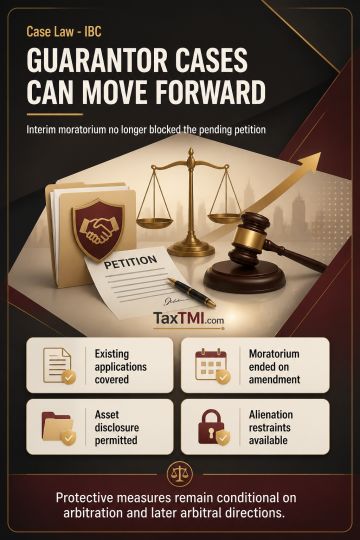
Retroactive interim-moratorium exclusion permits protective asset disclosure and preservation measures against personal guarantors pending arbitration...
Business expenditure deduction requires proof of genuine commission payments and commercial allowability; turnover growth alone cannot validate the cl...
Section 29A(c) disqualification must be assessed on the date the resolution plan is submitted, and an earlier NPA-based default cannot be relied on once the relevant corporate debtor's CIRP has ended with approval of a resolution plan and change of management. The Supreme Court held that no dues in praesenti survived on that date, so the appellant was not ineligible under Section 29A(c); prior employment and later slump-sale acquisition were insufficient to attract the bar. It further held that Section 29A(j) is only derivative of a valid ineligibility under clauses (a) to (i), so the connected-person objection also failed. The appeals were allowed, the NCLAT orders were set aside, and the resolution plan was directed to be processed further.
Section 29A(c) disqualification must be assessed on the date the resolution plan is submitted, and an earlier NPA-based default cannot be relied on once the relevant corporate debtor's CIRP has ended with approval of a resolution plan and change of management. The Supreme Court held that no dues in praesenti survived on that date, so the appellant was not ineligible under Section 29A(c); prior employment and later slump-sale acquisition were insufficient to attract the bar. It further held that Section 29A(j) is only derivative of a valid ineligibility under clauses (a) to (i), so the connected-person objection also failed. The appeals were allowed, the NCLAT orders were set aside, and the resolution plan was directed to be processed further.
Note: It is a system-generated summary and is for quick reference only.
 TaxTMI
 of 4805

















 Join Channel


 TaxTMI
