Additional evidence in transfer pricing dispute leads to fresh examination, while tax deductions, TDS credit, fee and refund interest require verifica...
Category II AIF pass-through taxation preserves non-business income character; investment receipts cannot be reclassified without applying recognised ...
Mutual fund maturity rules require proper rollover, redemption, disclosure, and due diligence; investor gains cannot excuse regulatory breaches or pen...
Threshold exemption excludes exempt services, while stamp-paper purchases avoid reverse charge; consequential service tax penalties were also set asid...
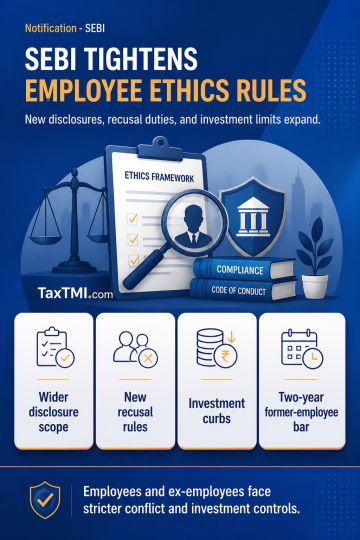
Employee conflict disclosures and investment restrictions expand with new recusal duties, post-employment limits, and compliance reporting requirement...
The Third Amendment Regulations, 2026 revise the insolvency...
Corporate insolvency resolution process amended with expanded disclosure, guarantor asset transfer rules, and new dissolution and restoration procedures.
Contents
Summary
Note
Bookmark
Share
✓ Copied successfully !
Print
Print Options
For full text, please login
Login to TaxTMI
Verification Pending
The Email Id has not been verified. Click on the link we have sent on
The Third Amendment Regulations, 2026 revise the insolvency resolution framework by expanding the information to be filed with section 9 and section 10 applications, including GST records, creditor details, assets, liabilities, guarantees, litigation, related-party transactions, regulatory approvals, and guarantor-related data. They also streamline form usage by replacing several prescribed forms with forms notified by circular, strengthen duties of the resolution professional and creditors to share information, and set timelines for claim decisions and withdrawal applications. The amendments further introduce procedures for transfer of guarantor assets, dissolution during CIRP, and restoration of CIRP before liquidation, and update the schedule structure.
The Third Amendment Regulations, 2026 revise the insolvency resolution framework by expanding the information to be filed with section 9 and section 10 applications, including GST records, creditor details, assets, liabilities, guarantees, litigation, related-party transactions, regulatory approvals, and guarantor-related data. They also streamline form usage by replacing several prescribed forms with forms notified by circular, strengthen duties of the resolution professional and creditors to share information, and set timelines for claim decisions and withdrawal applications. The amendments further introduce procedures for transfer of guarantor assets, dissolution during CIRP, and restoration of CIRP before liquidation, and update the schedule structure.
Note: It is a system-generated summary and is for quick reference only.
 TaxTMI
 of 4803




















 Join Channel


 TaxTMI
