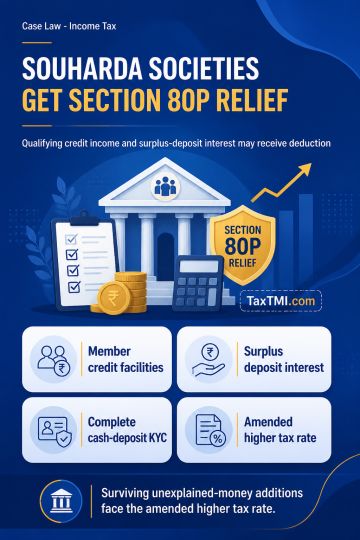
Section 80P deduction covers Souharda credit societies, including qualifying surplus-deposit interest, subject to member KYC verification for cash dep...
Transfer-pricing benchmarking and capital-receipt principles sustained taxpayer relief, while unsupported property-advance write-offs remained disallo...
Pre-existing operational debt disputes require genuine evidence, while undirected running-account payments may be appropriated on a first-in-first-out...
Agency in CNG distribution makes outlet operators commission agents, rendering taxable Business Auxiliary Service rather than purchasing goods for res...
The Third Amendment Regulations, 2026 revise the insolvency...
Corporate insolvency resolution process amended with expanded disclosure, guarantor asset transfer rules, and new dissolution and restoration procedures.
Contents
Summary
Note
Bookmark
Share
✓ Copied successfully !
Print
Print Options
For full text, please login
Login to TaxTMI
Verification Pending
The Email Id has not been verified. Click on the link we have sent on
The Third Amendment Regulations, 2026 revise the insolvency resolution framework by expanding the information to be filed with section 9 and section 10 applications, including GST records, creditor details, assets, liabilities, guarantees, litigation, related-party transactions, regulatory approvals, and guarantor-related data. They also streamline form usage by replacing several prescribed forms with forms notified by circular, strengthen duties of the resolution professional and creditors to share information, and set timelines for claim decisions and withdrawal applications. The amendments further introduce procedures for transfer of guarantor assets, dissolution during CIRP, and restoration of CIRP before liquidation, and update the schedule structure.
The Third Amendment Regulations, 2026 revise the insolvency resolution framework by expanding the information to be filed with section 9 and section 10 applications, including GST records, creditor details, assets, liabilities, guarantees, litigation, related-party transactions, regulatory approvals, and guarantor-related data. They also streamline form usage by replacing several prescribed forms with forms notified by circular, strengthen duties of the resolution professional and creditors to share information, and set timelines for claim decisions and withdrawal applications. The amendments further introduce procedures for transfer of guarantor assets, dissolution during CIRP, and restoration of CIRP before liquidation, and update the schedule structure.
Note: It is a system-generated summary and is for quick reference only.
 TaxTMI
 of 4805














 Join Channel


 TaxTMI