Article 8 treaty coverage excluded third-party airline support services, while documented demonetisation cash receipts remained accepted business inco...
Functional comparability under TNMM requires highway contract benchmarks to reflect operation, maintenance and transfer activities, requiring fresh be...
Objective characteristics govern magnesium bis-glycinate chelate classification as an amino-acid coordination compound, not a food preparation or anti...
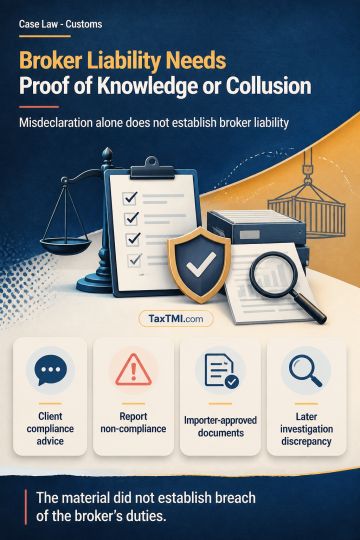
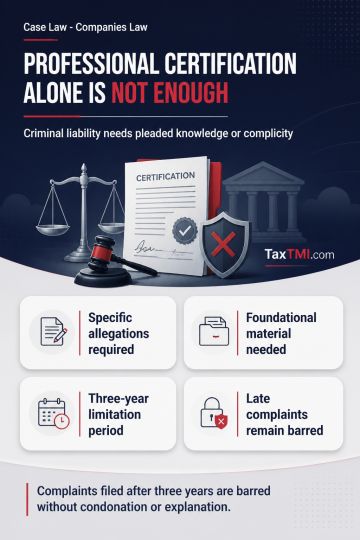
Independent professional certification requires pleaded knowledge or complicity for criminal liability; untimely complaints remain barred by limitatio...
The Third Amendment Regulations, 2026 revise the insolvency...
Corporate insolvency resolution process amended with expanded disclosure, guarantor asset transfer rules, and new dissolution and restoration procedures.
Contents
Summary
Note
Bookmark
Share
✓ Copied successfully !
Print
Print Options
For full text, please login
Login to TaxTMI
Verification Pending
The Email Id has not been verified. Click on the link we have sent on
The Third Amendment Regulations, 2026 revise the insolvency resolution framework by expanding the information to be filed with section 9 and section 10 applications, including GST records, creditor details, assets, liabilities, guarantees, litigation, related-party transactions, regulatory approvals, and guarantor-related data. They also streamline form usage by replacing several prescribed forms with forms notified by circular, strengthen duties of the resolution professional and creditors to share information, and set timelines for claim decisions and withdrawal applications. The amendments further introduce procedures for transfer of guarantor assets, dissolution during CIRP, and restoration of CIRP before liquidation, and update the schedule structure.
The Third Amendment Regulations, 2026 revise the insolvency resolution framework by expanding the information to be filed with section 9 and section 10 applications, including GST records, creditor details, assets, liabilities, guarantees, litigation, related-party transactions, regulatory approvals, and guarantor-related data. They also streamline form usage by replacing several prescribed forms with forms notified by circular, strengthen duties of the resolution professional and creditors to share information, and set timelines for claim decisions and withdrawal applications. The amendments further introduce procedures for transfer of guarantor assets, dissolution during CIRP, and restoration of CIRP before liquidation, and update the schedule structure.
Note: It is a system-generated summary and is for quick reference only.
 TaxTMI
 of 4805

















 Join Channel


 TaxTMI
