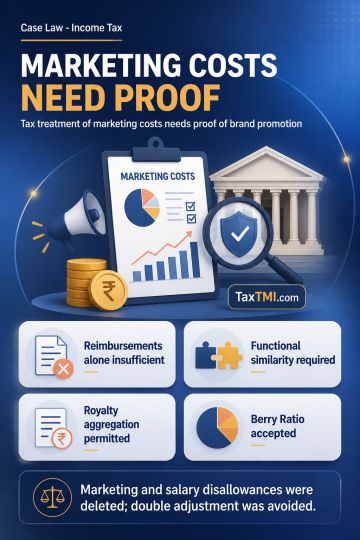
Transfer pricing requires evidence for AMP transactions, functionally reliable comparables, and appropriate aggregation or Berry Ratio benchmarking me...
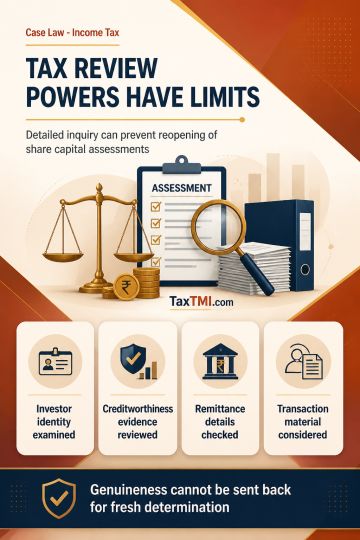
Revisionary jurisdiction cannot reopen share capital assessments where adequate inquiry supports a permissible view and no independent error is establ...
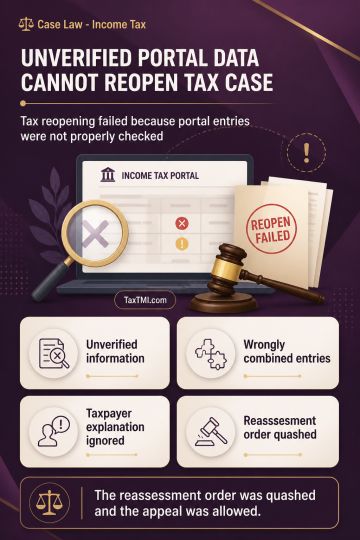
Reassessment jurisdiction fails where unverified portal information is aggregated without examining the taxpayer's explanation or relevance of entries...
Statutory sanction for delayed reassessment requires approval from the prescribed authority; approval by an inferior authority invalidates jurisdictio...
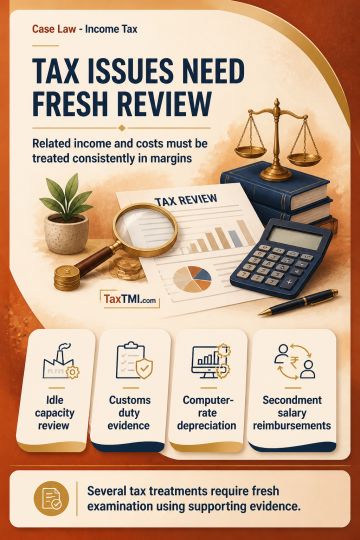
Transfer pricing margin adjustments require matching treatment of non-operating income and related costs, with comparability issues reconsidered on ev...
Preliminary-expense amortisation and MAT exempt-income adjustments prevailed, while trademark costs and managerial remuneration require fresh verifica...
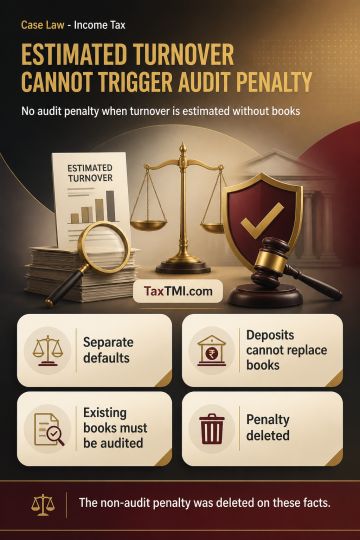
Export valuation requires contemporaneous evidence; unrelated invoices cannot prove overvaluation, and dual penalties on firm and partner are impermis...
The Third Amendment Regulations, 2026 revise the insolvency...
Corporate insolvency resolution process amended with expanded disclosure, guarantor asset transfer rules, and new dissolution and restoration procedures.
Contents
Summary
Note
Bookmark
Share
✓ Copied successfully !
Print
Print Options
For full text, please login
Login to TaxTMI
Verification Pending
The Email Id has not been verified. Click on the link we have sent on
The Third Amendment Regulations, 2026 revise the insolvency resolution framework by expanding the information to be filed with section 9 and section 10 applications, including GST records, creditor details, assets, liabilities, guarantees, litigation, related-party transactions, regulatory approvals, and guarantor-related data. They also streamline form usage by replacing several prescribed forms with forms notified by circular, strengthen duties of the resolution professional and creditors to share information, and set timelines for claim decisions and withdrawal applications. The amendments further introduce procedures for transfer of guarantor assets, dissolution during CIRP, and restoration of CIRP before liquidation, and update the schedule structure.
The Third Amendment Regulations, 2026 revise the insolvency resolution framework by expanding the information to be filed with section 9 and section 10 applications, including GST records, creditor details, assets, liabilities, guarantees, litigation, related-party transactions, regulatory approvals, and guarantor-related data. They also streamline form usage by replacing several prescribed forms with forms notified by circular, strengthen duties of the resolution professional and creditors to share information, and set timelines for claim decisions and withdrawal applications. The amendments further introduce procedures for transfer of guarantor assets, dissolution during CIRP, and restoration of CIRP before liquidation, and update the schedule structure.
Note: It is a system-generated summary and is for quick reference only.
 TaxTMI
 of 4807















 Join Channel


 TaxTMI
