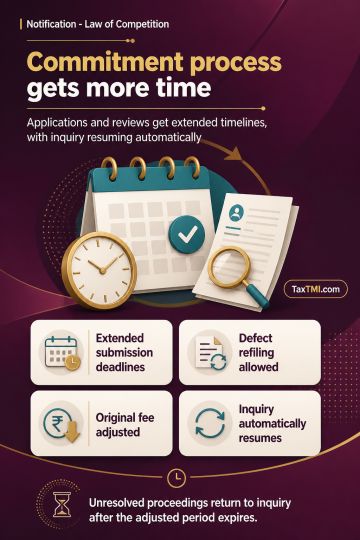
Commitment proceedings gain extended timelines, structured defect refiling, and automatic resumption of inquiry after the adjusted completion period e...
Centralised assessment transfer becomes unwarranted once the searched person's assessment is complete, requiring restoration to the appropriate charge...
Co-operative deduction eligibility excludes refund and commercial-bank interest, while qualifying co-operative investments require entity-wise verific...
Enhanced tax rate on surrendered unexplained income applies prospectively, while cash-deposit telescoping requires verification of available surrender...
Page of 4805
Press 'Enter' after typing page number.
101 to 120 of 96100 Results
❮
❯
❯❯
0 / 200
Expand Note
Add to Folder
No Folders have been created
+
Are you sure you want to delete "My most important" ?
Disciplinary action against an Assessing Officer for granting exemption while exercising quasi-judicial powers was unsustainable because the charge alleged only a faulty assessment, departure from the Department's earlier stand, and revenue prejudice. The HC held that misconduct requires more than an erroneous or debatable decision and must reflect lack of integrity, want of devotion to duty, mala fides, recklessness, conscious disregard of law, or undue favour. The officer had relied on earlier ITAT orders, relevant precedent, and changed facts, so his view was plausible and reasoned. In the absence of evidence of ill intention or personal gain, the charge-sheet and penalty order were rightly quashed, and the writ petition was dismissed.
Disciplinary action against an Assessing Officer for granting exemption while exercising quasi-judicial powers was unsustainable because the charge alleged only a faulty assessment, departure from the Department's earlier stand, and revenue prejudice. The HC held that misconduct requires more than an erroneous or debatable decision and must reflect lack of integrity, want of devotion to duty, mala fides, recklessness, conscious disregard of law, or undue favour. The officer had relied on earlier ITAT orders, relevant precedent, and changed facts, so his view was plausible and reasoned. In the absence of evidence of ill intention or personal gain, the charge-sheet and penalty order were rightly quashed, and the writ petition was dismissed.
Note: It is a system-generated summary and is for quick reference only.
 TaxTMI
 of 4805



















 Join Channel


 TaxTMI