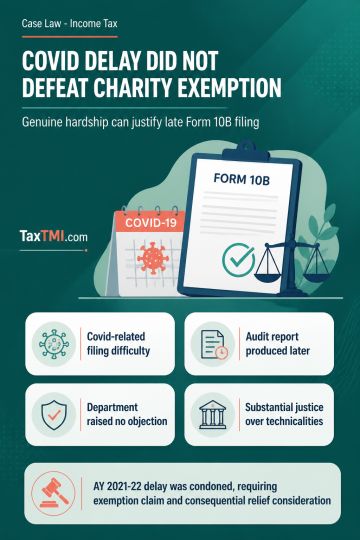
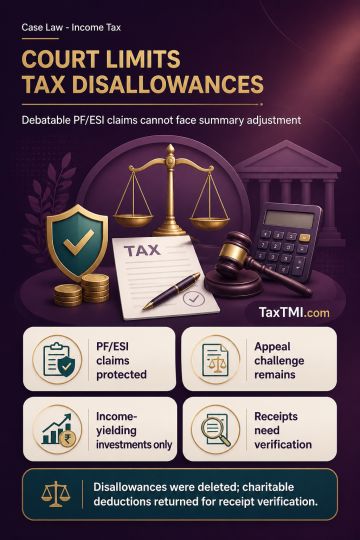
Belated Form 10B filing during Covid-19 cannot defeat charitable exemption where genuine hardship warrants condonation and substantial justice prevail...
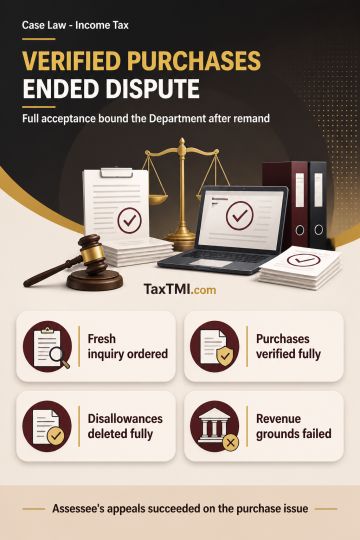
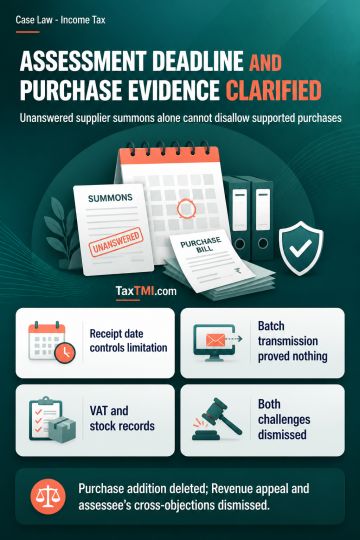
Limitation for consequential assessments runs from prescribed authority receipt, while verified purchases cannot be disallowed merely for unanswered s...
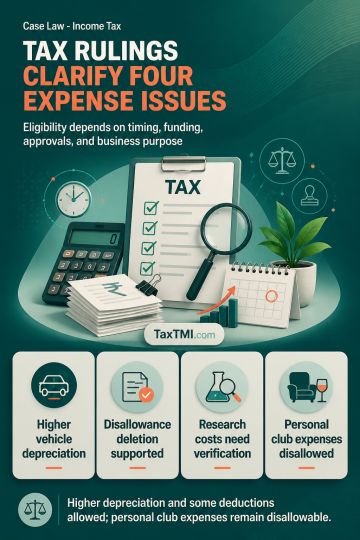
Higher depreciation for qualifying commercial vehicles, exempt-income disallowance, research deduction verification, and club-expense treatment clarif...
Charitable registration renewal cannot become an assessment of receipts, profitability or annual exemption compliance, requiring renewal and donation ...
Page of 4805
Press 'Enter' after typing page number.
61 to 80 of 96100 Results
❮
❯
❯❯
0 / 200
Expand Note
Add to Folder
No Folders have been created
+
Are you sure you want to delete "My most important" ?
Disciplinary action against an Assessing Officer for granting exemption while exercising quasi-judicial powers was unsustainable because the charge alleged only a faulty assessment, departure from the Department's earlier stand, and revenue prejudice. The HC held that misconduct requires more than an erroneous or debatable decision and must reflect lack of integrity, want of devotion to duty, mala fides, recklessness, conscious disregard of law, or undue favour. The officer had relied on earlier ITAT orders, relevant precedent, and changed facts, so his view was plausible and reasoned. In the absence of evidence of ill intention or personal gain, the charge-sheet and penalty order were rightly quashed, and the writ petition was dismissed.
Disciplinary action against an Assessing Officer for granting exemption while exercising quasi-judicial powers was unsustainable because the charge alleged only a faulty assessment, departure from the Department's earlier stand, and revenue prejudice. The HC held that misconduct requires more than an erroneous or debatable decision and must reflect lack of integrity, want of devotion to duty, mala fides, recklessness, conscious disregard of law, or undue favour. The officer had relied on earlier ITAT orders, relevant precedent, and changed facts, so his view was plausible and reasoned. In the absence of evidence of ill intention or personal gain, the charge-sheet and penalty order were rightly quashed, and the writ petition was dismissed.
Note: It is a system-generated summary and is for quick reference only.
 TaxTMI
 of 4805








 Join Channel


 TaxTMI