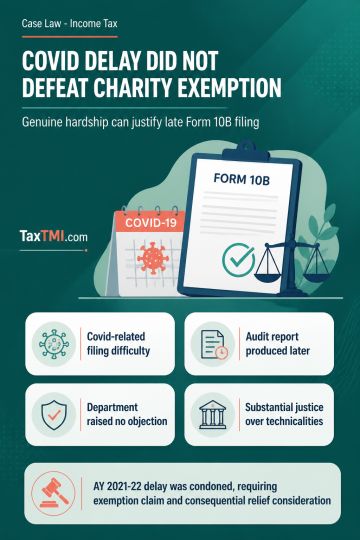
Belated Form 10B filing during Covid-19 cannot defeat charitable exemption where genuine hardship warrants condonation and substantial justice prevail...
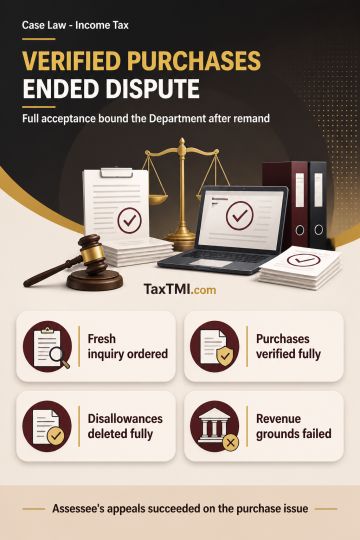
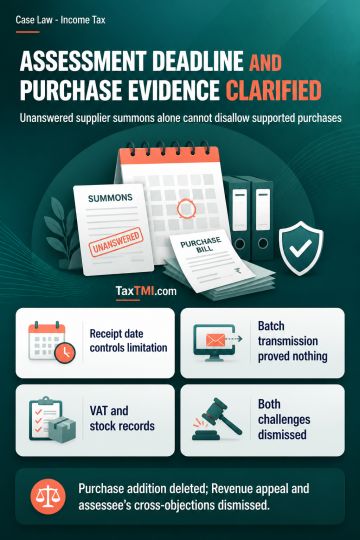
Limitation for consequential assessments runs from prescribed authority receipt, while verified purchases cannot be disallowed merely for unanswered s...
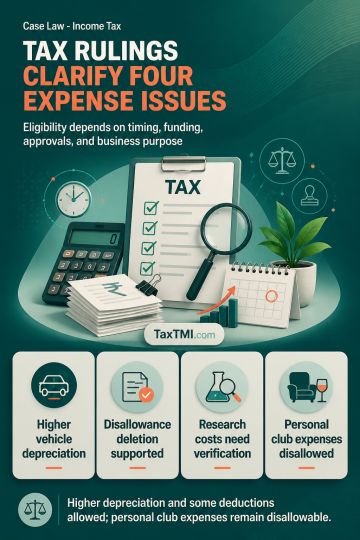
Higher depreciation for qualifying commercial vehicles, exempt-income disallowance, research deduction verification, and club-expense treatment clarif...
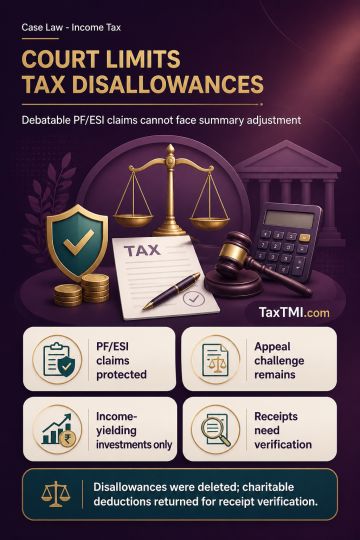
Charitable registration renewal cannot become an assessment of receipts, profitability or annual exemption compliance, requiring renewal and donation ...
AMP expenditure for own business is not an international transaction without an associated-enterprise arrangement, eliminating transfer pricing adjust...
Page of 4809
Press 'Enter' after typing page number.
141 to 160 of 96177 Results
❮
❯
❯❯
0 / 200
Expand Note
Add to Folder
No Folders have been created
+
Are you sure you want to delete "My most important" ?
Valid country of origin certificates under the India-ASEAN PTA Rules, the India-Malaysia PTA Rules and the exemption notifications could not be ignored for preferential customs duty unless they were invalidated through the prescribed retroactive verification mechanism. CESTAT held that Customs was bound to act on the certificates as documentary proof of origin, and the Revenue's reliance on a later Madras High Court decision was distinguishable because that case involved serious discrepancies in the certificate itself. It also held that, for the relevant period, the importer had no mandatory obligation to prove how regional value content was satisfied; that requirement arose only after Section 28DA and the CAROTAR Rules. The denial of exemption, with demand, interest and penalty, was set aside.
Valid country of origin certificates under the India-ASEAN PTA Rules, the India-Malaysia PTA Rules and the exemption notifications could not be ignored for preferential customs duty unless they were invalidated through the prescribed retroactive verification mechanism. CESTAT held that Customs was bound to act on the certificates as documentary proof of origin, and the Revenue's reliance on a later Madras High Court decision was distinguishable because that case involved serious discrepancies in the certificate itself. It also held that, for the relevant period, the importer had no mandatory obligation to prove how regional value content was satisfied; that requirement arose only after Section 28DA and the CAROTAR Rules. The denial of exemption, with demand, interest and penalty, was set aside.
Note: It is a system-generated summary and is for quick reference only.
 TaxTMI
  TaxTMI
 of 4809













 Join Channel