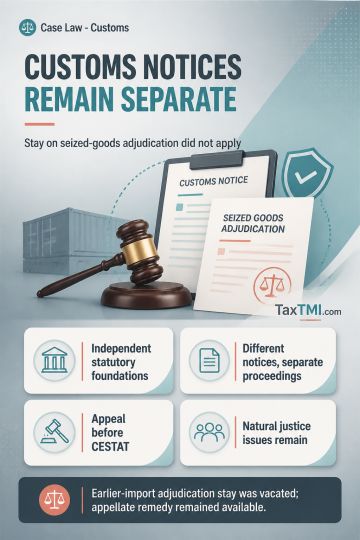
Independent show-cause notices remain separate proceedings, while customs adjudication challenges should ordinarily follow the statutory appellate rem...
Institutional incapacity in customs settlement proceedings excludes non-functional quorum periods from statutory disposal timelines, preventing automa...
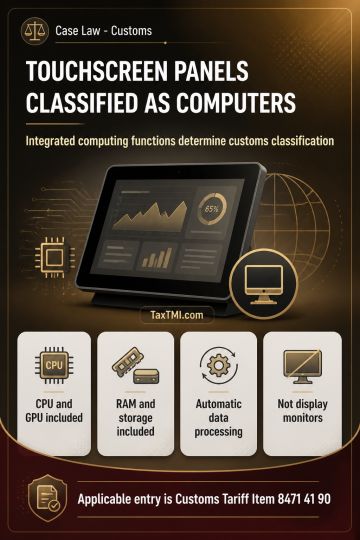
Interactive touchscreen panels with integrated computing functions fall under automatic data-processing machines rather than display monitors for cust...
Ex parte injunction service requirements were substantially met, while civil recovery and SFIO investigation into provident fund defalcation continued...
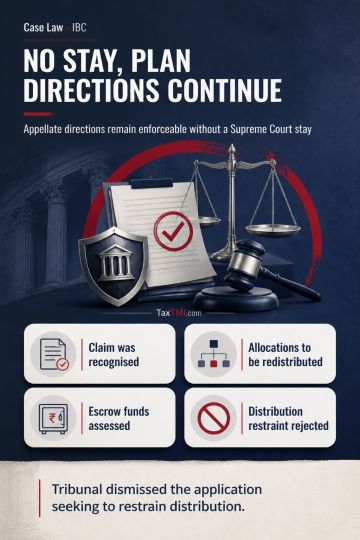
Enforcement of resolution-plan directions continues without a Supreme Court stay, preventing suspension of redistribution and escrowed-fund distributi...
Third-party ownership claims over attached property require Special Court adjudication where purchasers lack registered sale deeds and bona fides rema...
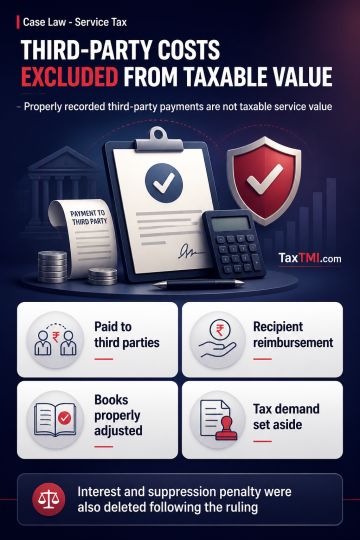
Pure-agent reimbursements in clearing and forwarding services are excluded from taxable value when qualifying third-party payments are properly record...
Valid country of origin certificates under the India-ASEAN PTA Rules, the India-Malaysia PTA Rules and the exemption notifications could not be ignored for preferential customs duty unless they were invalidated through the prescribed retroactive verification mechanism. CESTAT held that Customs was bound to act on the certificates as documentary proof of origin, and the Revenue's reliance on a later Madras High Court decision was distinguishable because that case involved serious discrepancies in the certificate itself. It also held that, for the relevant period, the importer had no mandatory obligation to prove how regional value content was satisfied; that requirement arose only after Section 28DA and the CAROTAR Rules. The denial of exemption, with demand, interest and penalty, was set aside.
Valid country of origin certificates under the India-ASEAN PTA Rules, the India-Malaysia PTA Rules and the exemption notifications could not be ignored for preferential customs duty unless they were invalidated through the prescribed retroactive verification mechanism. CESTAT held that Customs was bound to act on the certificates as documentary proof of origin, and the Revenue's reliance on a later Madras High Court decision was distinguishable because that case involved serious discrepancies in the certificate itself. It also held that, for the relevant period, the importer had no mandatory obligation to prove how regional value content was satisfied; that requirement arose only after Section 28DA and the CAROTAR Rules. The denial of exemption, with demand, interest and penalty, was set aside.
Note: It is a system-generated summary and is for quick reference only.
 TaxTMI
 of 4807















 Join Channel


 TaxTMI
