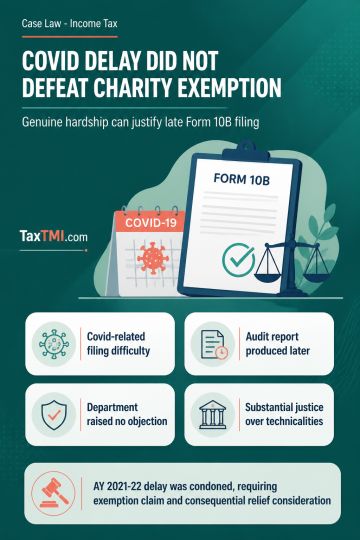
Belated Form 10B filing during Covid-19 cannot defeat charitable exemption where genuine hardship warrants condonation and substantial justice prevail...
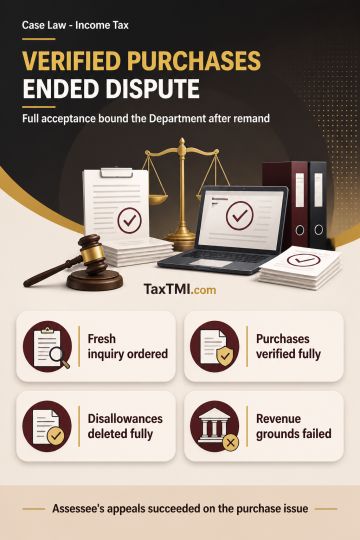
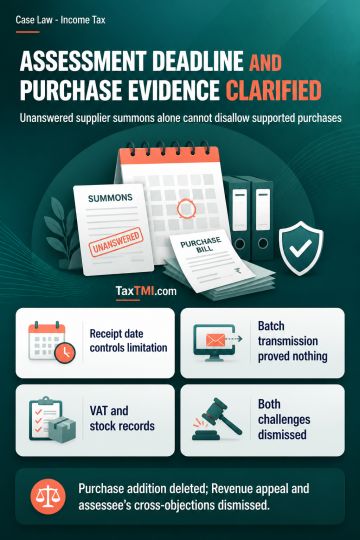
Limitation for consequential assessments runs from prescribed authority receipt, while verified purchases cannot be disallowed merely for unanswered s...
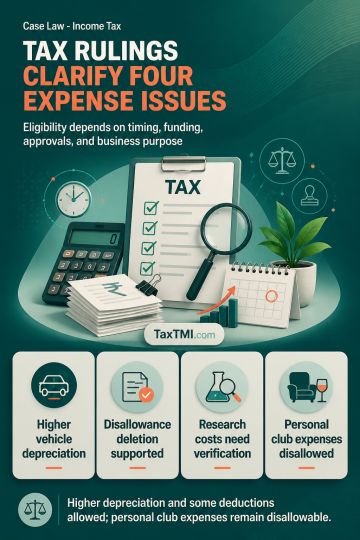
Higher depreciation for qualifying commercial vehicles, exempt-income disallowance, research deduction verification, and club-expense treatment clarif...
Charitable registration renewal cannot become an assessment of receipts, profitability or annual exemption compliance, requiring renewal and donation ...
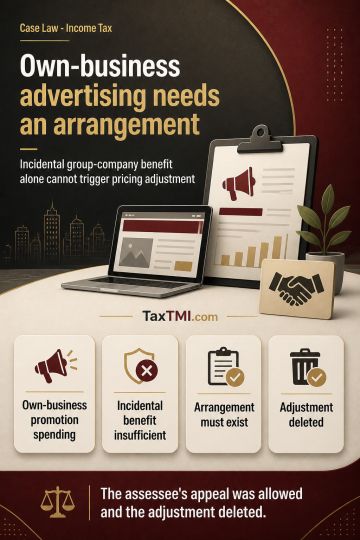
AMP expenditure for own business is not an international transaction without an associated-enterprise arrangement, eliminating transfer pricing adjust...
The amendment regulations expand and standardise the personal guarantor insolvency framework by removing clause (e) in regulation 3, replacing prescribed Forms A, B and C with forms notified by circular, and inserting a detailed statement-of-assets requirement for applications under sections 94 and 95. The new disclosure covers cash, business interests, investments, immovable property, retirement benefits, digital assets, intellectual property, valuables, agricultural assets, receivables, contingent claims, ESOPs and beneficial interests, including assets held indirectly, jointly, fiduciary or through nominees and other arrangements. They also introduce a coordination and creditor-approval mechanism for transfer of assets in related corporate insolvency proceedings and align certain procedural provisions with sections 106 and 28A.
The amendment regulations expand and standardise the personal guarantor insolvency framework by removing clause (e) in regulation 3, replacing prescribed Forms A, B and C with forms notified by circular, and inserting a detailed statement-of-assets requirement for applications under sections 94 and 95. The new disclosure covers cash, business interests, investments, immovable property, retirement benefits, digital assets, intellectual property, valuables, agricultural assets, receivables, contingent claims, ESOPs and beneficial interests, including assets held indirectly, jointly, fiduciary or through nominees and other arrangements. They also introduce a coordination and creditor-approval mechanism for transfer of assets in related corporate insolvency proceedings and align certain procedural provisions with sections 106 and 28A.
Note: It is a system-generated summary and is for quick reference only.
 TaxTMI
 of 4807






 Join Channel


 TaxTMI