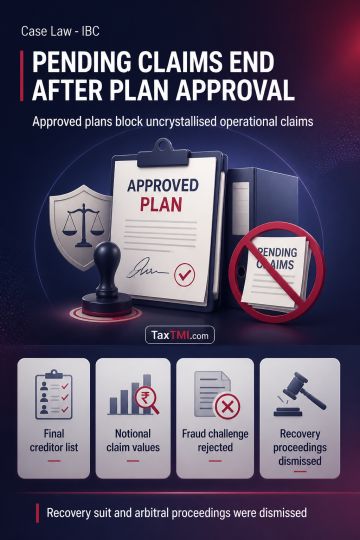
Clean slate principle extinguishes uncrystallised operational claims and bars continuation of pending recovery and arbitral proceedings after plan app...
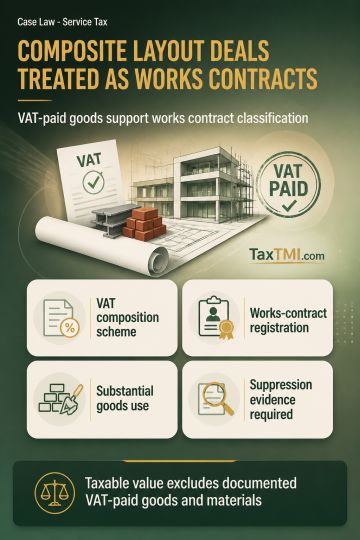
Works contract classification governs composite layout-development contracts where VAT-paid goods are transferred alongside construction and infrastru...
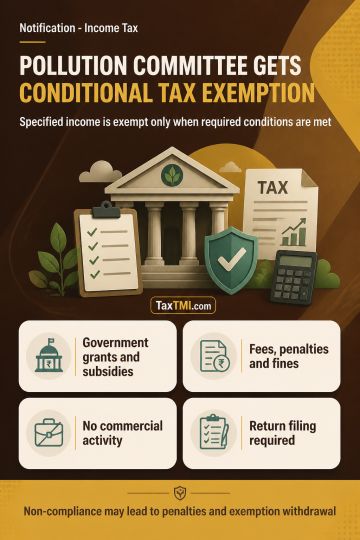
Specified income tax exemption for pollution control body remains conditional on non-commercial activity, unchanged income character, and return filin...
Page of 4803
Press 'Enter' after typing page number.
1061 to 1080 of 96046 Results
❮
❯
❯❯
0 / 200
Expand Note
Add to Folder
No Folders have been created
+
Are you sure you want to delete "My most important" ?
The amendment regulations expand and standardise the personal guarantor insolvency framework by removing clause (e) in regulation 3, replacing prescribed Forms A, B and C with forms notified by circular, and inserting a detailed statement-of-assets requirement for applications under sections 94 and 95. The new disclosure covers cash, business interests, investments, immovable property, retirement benefits, digital assets, intellectual property, valuables, agricultural assets, receivables, contingent claims, ESOPs and beneficial interests, including assets held indirectly, jointly, fiduciary or through nominees and other arrangements. They also introduce a coordination and creditor-approval mechanism for transfer of assets in related corporate insolvency proceedings and align certain procedural provisions with sections 106 and 28A.
The amendment regulations expand and standardise the personal guarantor insolvency framework by removing clause (e) in regulation 3, replacing prescribed Forms A, B and C with forms notified by circular, and inserting a detailed statement-of-assets requirement for applications under sections 94 and 95. The new disclosure covers cash, business interests, investments, immovable property, retirement benefits, digital assets, intellectual property, valuables, agricultural assets, receivables, contingent claims, ESOPs and beneficial interests, including assets held indirectly, jointly, fiduciary or through nominees and other arrangements. They also introduce a coordination and creditor-approval mechanism for transfer of assets in related corporate insolvency proceedings and align certain procedural provisions with sections 106 and 28A.
Note: It is a system-generated summary and is for quick reference only.
 TaxTMI
 of 4803








 Join Channel


 TaxTMI
