Necessary-party requirements limit impleadment of independent entities, while deferred consideration does not create an appealable adverse determinati...
Food supplement classification requires common parlance and authoritative tests, preventing treatment as proprietary Ayurvedic medicines without suppo...
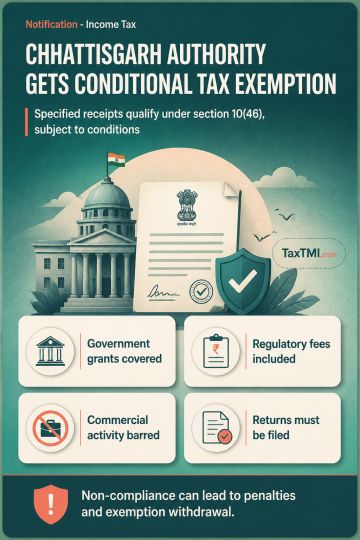
Specified regulatory authority income receives conditional tax exemption, subject to non-commercial activity, unchanged income character, and return f...
Tax exemption for regulatory authority income applies retrospectively, subject to non-commercial activity, unchanged income sources, and return-filing...
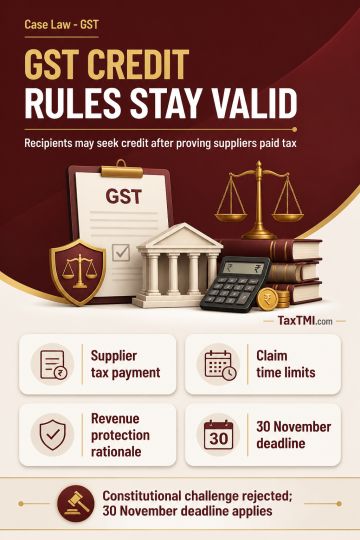
Input tax credit conditions remain constitutionally valid, with eligible recipient claims considered under GST circulars and retrospective filing dead...
The amendment regulations expand and standardise the personal guarantor insolvency framework by removing clause (e) in regulation 3, replacing prescribed Forms A, B and C with forms notified by circular, and inserting a detailed statement-of-assets requirement for applications under sections 94 and 95. The new disclosure covers cash, business interests, investments, immovable property, retirement benefits, digital assets, intellectual property, valuables, agricultural assets, receivables, contingent claims, ESOPs and beneficial interests, including assets held indirectly, jointly, fiduciary or through nominees and other arrangements. They also introduce a coordination and creditor-approval mechanism for transfer of assets in related corporate insolvency proceedings and align certain procedural provisions with sections 106 and 28A.
The amendment regulations expand and standardise the personal guarantor insolvency framework by removing clause (e) in regulation 3, replacing prescribed Forms A, B and C with forms notified by circular, and inserting a detailed statement-of-assets requirement for applications under sections 94 and 95. The new disclosure covers cash, business interests, investments, immovable property, retirement benefits, digital assets, intellectual property, valuables, agricultural assets, receivables, contingent claims, ESOPs and beneficial interests, including assets held indirectly, jointly, fiduciary or through nominees and other arrangements. They also introduce a coordination and creditor-approval mechanism for transfer of assets in related corporate insolvency proceedings and align certain procedural provisions with sections 106 and 28A.
Note: It is a system-generated summary and is for quick reference only.
 TaxTMI
 of 4805















 Join Channel


 TaxTMI
