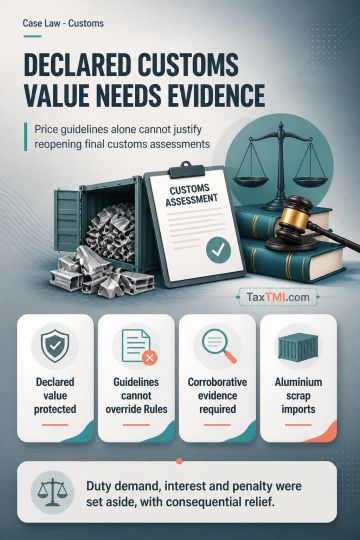
Transaction value cannot be rejected solely on non-statutory valuation guidelines without corroborative evidence supporting reassessment of final cust...
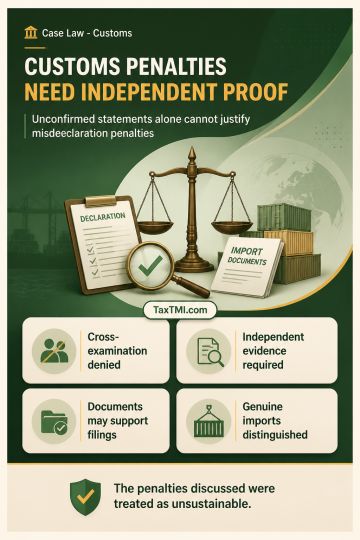
Cross-examination rights and corroborated evidence limit customs penalties for misdeclaration in genuine import transactions involving documented clea...
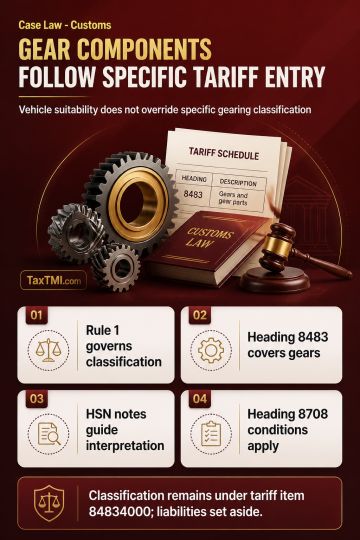
Tariff classification of vehicle gear components follows the specific gearing entry, displacing motor-vehicle parts classification and related liabili...
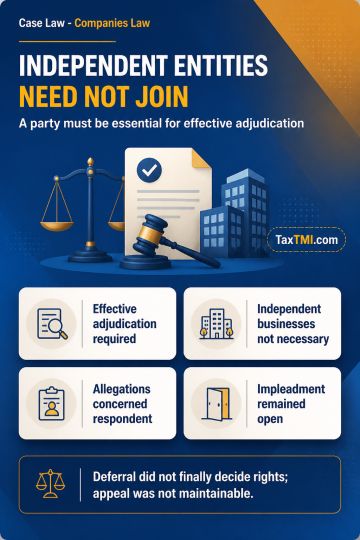
Necessary-party requirements limit impleadment of independent entities, while deferred consideration does not create an appealable adverse determinati...
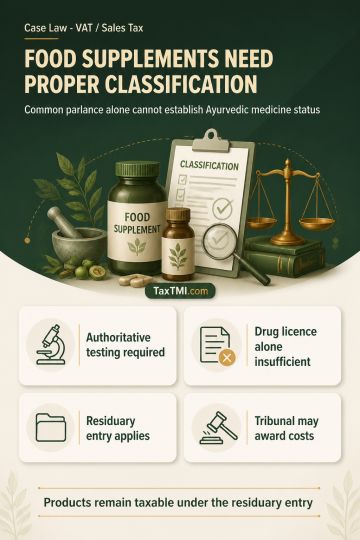
Food supplement classification requires common parlance and authoritative tests, preventing treatment as proprietary Ayurvedic medicines without suppo...
Input tax credit on statutory canteen services is restricted by the blocked credit rule for food and beverages, but credit remains available where the employer is legally obliged to provide the facility under the Factories Act. Accordingly, canteen services for regular employees qualified only to the extent the cost was actually borne by the employer; any portion recovered from employees was outside admissible credit. Canteen services attributable to contract workers did not qualify, because they were not employees, no corresponding statutory obligation was shown, and the inward service was not used for any outward supply of the same category. The admissibility of credit was therefore confined to the employer's own statutory expenditure.
Input tax credit on statutory canteen services is restricted by the blocked credit rule for food and beverages, but credit remains available where the employer is legally obliged to provide the facility under the Factories Act. Accordingly, canteen services for regular employees qualified only to the extent the cost was actually borne by the employer; any portion recovered from employees was outside admissible credit. Canteen services attributable to contract workers did not qualify, because they were not employees, no corresponding statutory obligation was shown, and the inward service was not used for any outward supply of the same category. The admissibility of credit was therefore confined to the employer's own statutory expenditure.
Note: It is a system-generated summary and is for quick reference only.
 TaxTMI
 of 4805







 Join Channel


 TaxTMI
