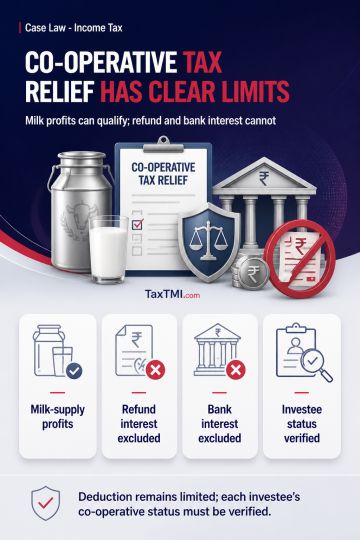
Co-operative deduction eligibility excludes refund and commercial-bank interest, while qualifying co-operative investments require entity-wise verific...
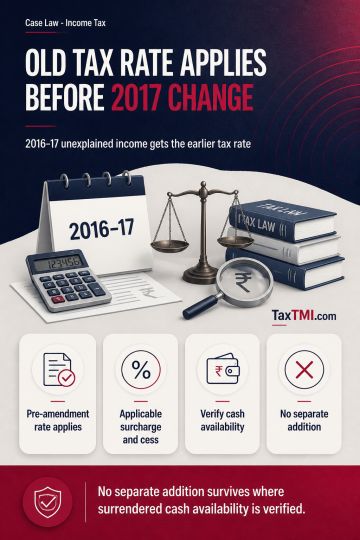
Enhanced tax rate on surrendered unexplained income applies prospectively, while cash-deposit telescoping requires verification of available surrender...
Customs Broker licence proceedings require accurate procedural facts before delay or natural-justice findings can justify setting aside regulatory act...
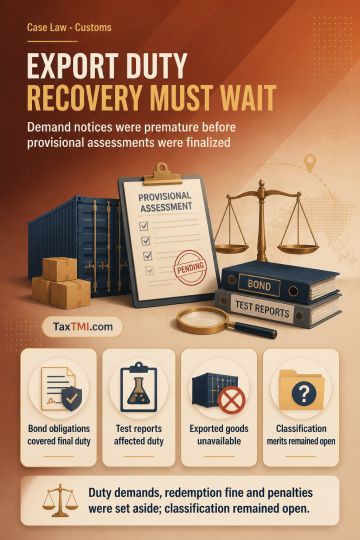
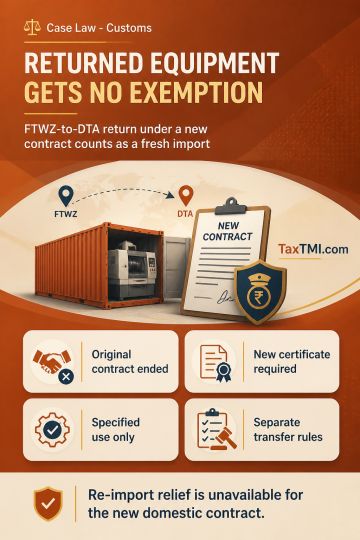
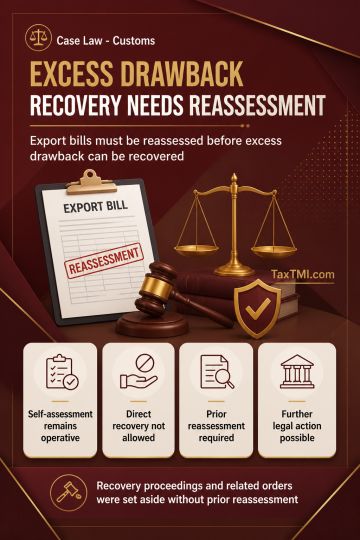
Provisional assessment finalisation must precede export duty recovery, while redemption fine fails for goods already exported and unavailable for conf...
Page of 4811
Press 'Enter' after typing page number.
221 to 240 of 96207 Results
❮
❯
❯❯
0 / 200
Expand Note
Add to Folder
No Folders have been created
+
Are you sure you want to delete "My most important" ?
Input tax credit on statutory canteen services is restricted by the blocked credit rule for food and beverages, but credit remains available where the employer is legally obliged to provide the facility under the Factories Act. Accordingly, canteen services for regular employees qualified only to the extent the cost was actually borne by the employer; any portion recovered from employees was outside admissible credit. Canteen services attributable to contract workers did not qualify, because they were not employees, no corresponding statutory obligation was shown, and the inward service was not used for any outward supply of the same category. The admissibility of credit was therefore confined to the employer's own statutory expenditure.
Input tax credit on statutory canteen services is restricted by the blocked credit rule for food and beverages, but credit remains available where the employer is legally obliged to provide the facility under the Factories Act. Accordingly, canteen services for regular employees qualified only to the extent the cost was actually borne by the employer; any portion recovered from employees was outside admissible credit. Canteen services attributable to contract workers did not qualify, because they were not employees, no corresponding statutory obligation was shown, and the inward service was not used for any outward supply of the same category. The admissibility of credit was therefore confined to the employer's own statutory expenditure.
Note: It is a system-generated summary and is for quick reference only.
 TaxTMI
  TaxTMI
 of 4811







 Join Channel