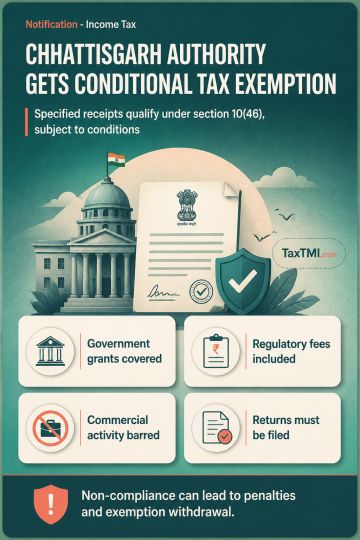
Specified regulatory authority income receives conditional tax exemption, subject to non-commercial activity, unchanged income character, and return f...
Tax exemption for regulatory authority income applies retrospectively, subject to non-commercial activity, unchanged income sources, and return-filing...
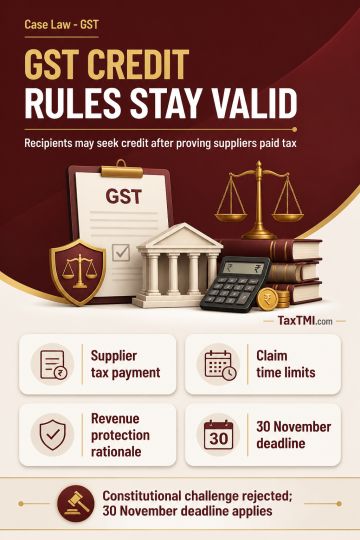
Input tax credit conditions remain constitutionally valid, with eligible recipient claims considered under GST circulars and retrospective filing dead...
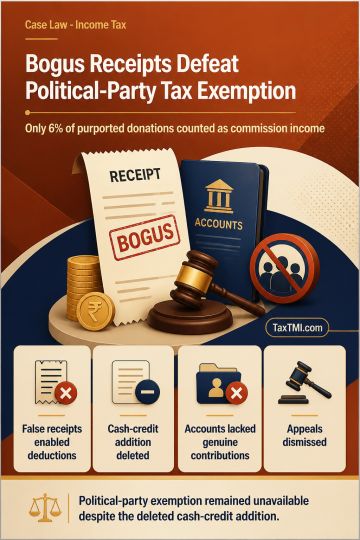
Bogus donation receipts justified commission income assessment and defeated political-party tax exemption for inaccurate accounts and reporting failur...
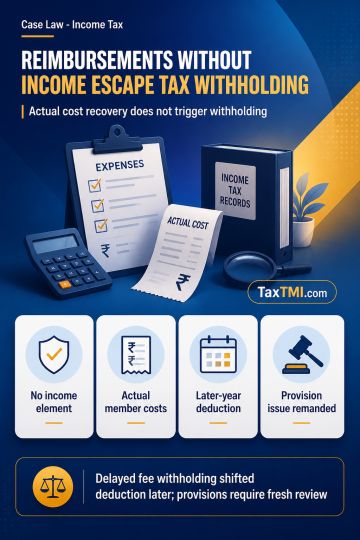
Pure reimbursement without income element escapes tax withholding, while delayed withholding and unsupported provisions face deferred or renewed scrut...
Public benefit requirement defeats charitable registration where residents' association services are reciprocal, member-only facilities governed by mu...
Transfer pricing benchmarking had to be confined to the assessee's international transactions where segmental results for associated enterprise and non-associated enterprise dealings were available and capable of segregation. Entity-level margins could not be used merely because the segmental accounts were unaudited, and the benchmarking was therefore directed to be on segmental profitability. In applying external TNMM, comparables had to satisfy functional, asset and risk similarity; retail businesses, fabric or yarn manufacturers, contract socks manufacturers, leather garment manufacturers, and companies with merger or acquisition during the year were excluded, and exporters with export revenue below 75% of sales were also filtered out. The TPO was directed to redo comparability analysis and allow the +/- 5% tolerance under section 92C(2).
Transfer pricing benchmarking had to be confined to the assessee's international transactions where segmental results for associated enterprise and non-associated enterprise dealings were available and capable of segregation. Entity-level margins could not be used merely because the segmental accounts were unaudited, and the benchmarking was therefore directed to be on segmental profitability. In applying external TNMM, comparables had to satisfy functional, asset and risk similarity; retail businesses, fabric or yarn manufacturers, contract socks manufacturers, leather garment manufacturers, and companies with merger or acquisition during the year were excluded, and exporters with export revenue below 75% of sales were also filtered out. The TPO was directed to redo comparability analysis and allow the +/- 5% tolerance under section 92C(2).
Note: It is a system-generated summary and is for quick reference only.
 TaxTMI
 of 4805











 Join Channel


 TaxTMI