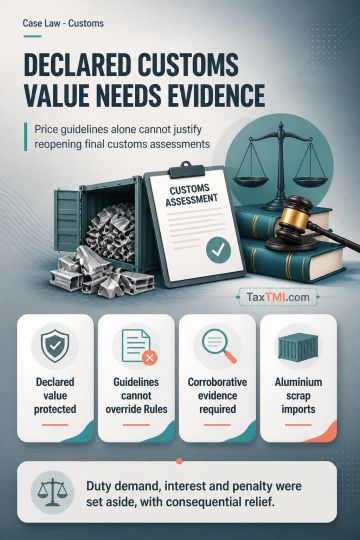
Transaction value cannot be rejected solely on non-statutory valuation guidelines without corroborative evidence supporting reassessment of final cust...
Cross-examination rights and corroborated evidence limit customs penalties for misdeclaration in genuine import transactions involving documented clea...
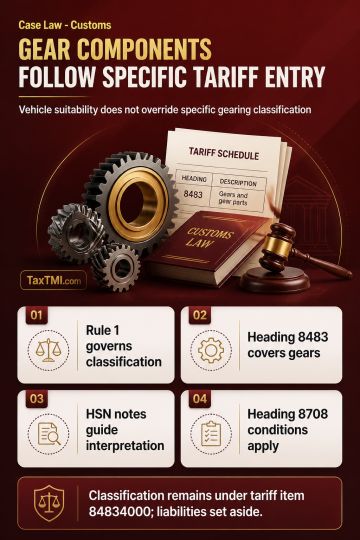
Tariff classification of vehicle gear components follows the specific gearing entry, displacing motor-vehicle parts classification and related liabili...
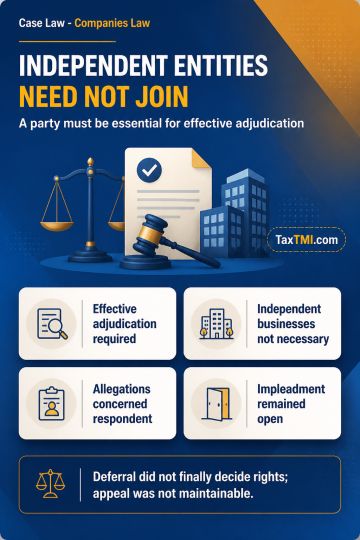
Necessary-party requirements limit impleadment of independent entities, while deferred consideration does not create an appealable adverse determinati...
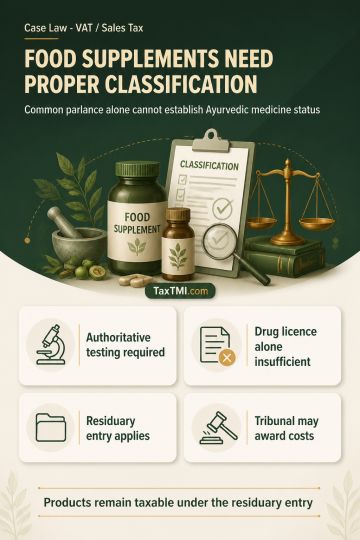
Food supplement classification requires common parlance and authoritative tests, preventing treatment as proprietary Ayurvedic medicines without suppo...
Transfer pricing benchmarking had to be confined to the assessee's international transactions where segmental results for associated enterprise and non-associated enterprise dealings were available and capable of segregation. Entity-level margins could not be used merely because the segmental accounts were unaudited, and the benchmarking was therefore directed to be on segmental profitability. In applying external TNMM, comparables had to satisfy functional, asset and risk similarity; retail businesses, fabric or yarn manufacturers, contract socks manufacturers, leather garment manufacturers, and companies with merger or acquisition during the year were excluded, and exporters with export revenue below 75% of sales were also filtered out. The TPO was directed to redo comparability analysis and allow the +/- 5% tolerance under section 92C(2).
Transfer pricing benchmarking had to be confined to the assessee's international transactions where segmental results for associated enterprise and non-associated enterprise dealings were available and capable of segregation. Entity-level margins could not be used merely because the segmental accounts were unaudited, and the benchmarking was therefore directed to be on segmental profitability. In applying external TNMM, comparables had to satisfy functional, asset and risk similarity; retail businesses, fabric or yarn manufacturers, contract socks manufacturers, leather garment manufacturers, and companies with merger or acquisition during the year were excluded, and exporters with export revenue below 75% of sales were also filtered out. The TPO was directed to redo comparability analysis and allow the +/- 5% tolerance under section 92C(2).
Note: It is a system-generated summary and is for quick reference only.
 TaxTMI
 of 4805





 Join Channel


 TaxTMI
