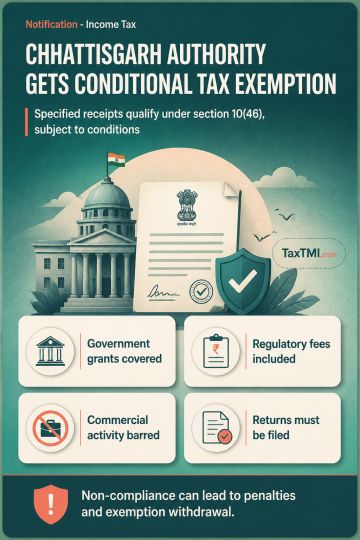
Specified regulatory authority income receives conditional tax exemption, subject to non-commercial activity, unchanged income character, and return f...
Tax exemption for regulatory authority income applies retrospectively, subject to non-commercial activity, unchanged income sources, and return-filing...
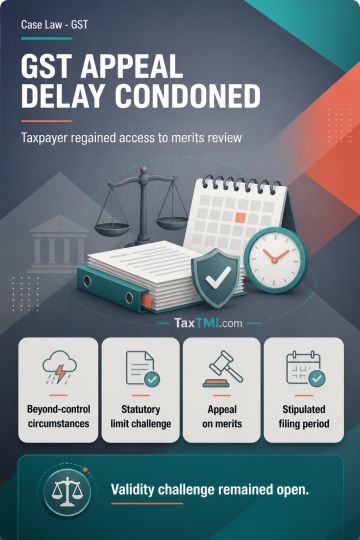
Input tax credit conditions remain constitutionally valid, with eligible recipient claims considered under GST circulars and retrospective filing dead...
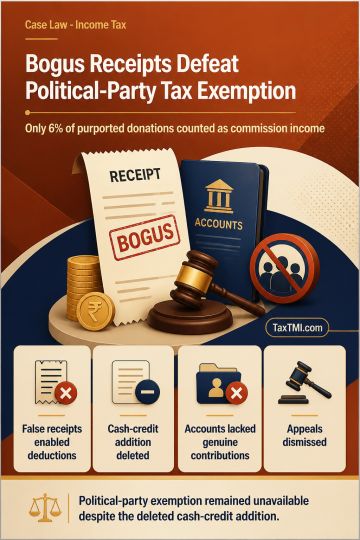
Bogus donation receipts justified commission income assessment and defeated political-party tax exemption for inaccurate accounts and reporting failur...
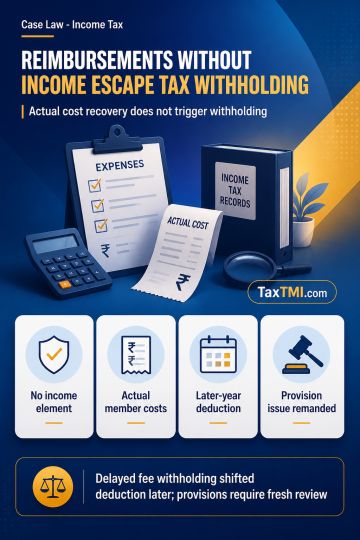
Pure reimbursement without income element escapes tax withholding, while delayed withholding and unsupported provisions face deferred or renewed scrut...
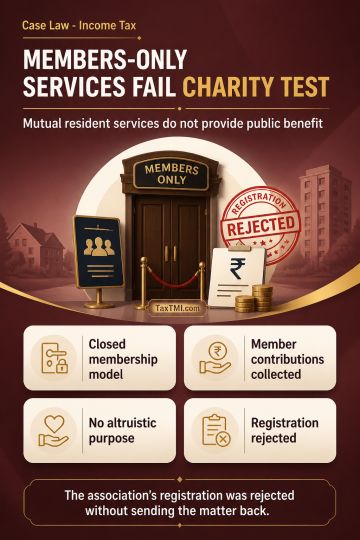
Public benefit requirement defeats charitable registration where residents' association services are reciprocal, member-only facilities governed by mu...
A composite lease of tea estates was held to be an agricultural arrangement, not taxable renting of immovable property, because it was directed to plantation operations such as cultivation, harvesting and processing of green tea leaves, with consideration linked to agricultural output. The Tribunal held that land, labour quarters, staff facilities and machinery integral to plantation activity could not be artificially split into separate taxable services, and the demands for manpower supply and supply of tangible goods also failed because there was no independent consideration, possession, or effective control by the recipient. The impugned orders were set aside, and limitation, interest and penalties did not survive.
A composite lease of tea estates was held to be an agricultural arrangement, not taxable renting of immovable property, because it was directed to plantation operations such as cultivation, harvesting and processing of green tea leaves, with consideration linked to agricultural output. The Tribunal held that land, labour quarters, staff facilities and machinery integral to plantation activity could not be artificially split into separate taxable services, and the demands for manpower supply and supply of tangible goods also failed because there was no independent consideration, possession, or effective control by the recipient. The impugned orders were set aside, and limitation, interest and penalties did not survive.
Note: It is a system-generated summary and is for quick reference only.
 TaxTMI
 of 4805











 Join Channel


 TaxTMI