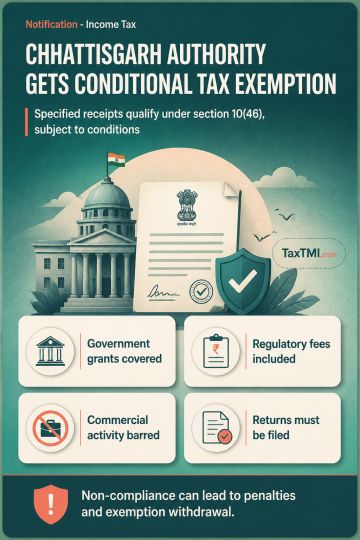
Specified regulatory authority income receives conditional tax exemption, subject to non-commercial activity, unchanged income character, and return f...
Tax exemption for regulatory authority income applies retrospectively, subject to non-commercial activity, unchanged income sources, and return-filing...
Input tax credit conditions remain constitutionally valid, with eligible recipient claims considered under GST circulars and retrospective filing dead...
Bogus donation receipts justified commission income assessment and defeated political-party tax exemption for inaccurate accounts and reporting failur...
Pure reimbursement without income element escapes tax withholding, while delayed withholding and unsupported provisions face deferred or renewed scrut...
Public benefit requirement defeats charitable registration where residents' association services are reciprocal, member-only facilities governed by mu...
In a prosecution under Section 132 of the CGST Act, the High Court held that pre-trial custody must remain exceptional because liberty cannot be curtailed on a punitive basis before conviction. Bail was granted after noting that the maximum sentence was five years, the matter was triable by a Magistrate, investigation was complete, complaint had been filed, there was no criminal antecedent or material showing risk of tampering, intimidation, flight, or non-cooperation, and the case was largely documentary. The Court also considered that charge had not been framed and trial was unlikely to conclude soon, so continued detention would amount to punitive custody rather than securing the trial.
In a prosecution under Section 132 of the CGST Act, the High Court held that pre-trial custody must remain exceptional because liberty cannot be curtailed on a punitive basis before conviction. Bail was granted after noting that the maximum sentence was five years, the matter was triable by a Magistrate, investigation was complete, complaint had been filed, there was no criminal antecedent or material showing risk of tampering, intimidation, flight, or non-cooperation, and the case was largely documentary. The Court also considered that charge had not been framed and trial was unlikely to conclude soon, so continued detention would amount to punitive custody rather than securing the trial.
Note: It is a system-generated summary and is for quick reference only.
 TaxTMI
 of 4805


















 Join Channel


 TaxTMI

