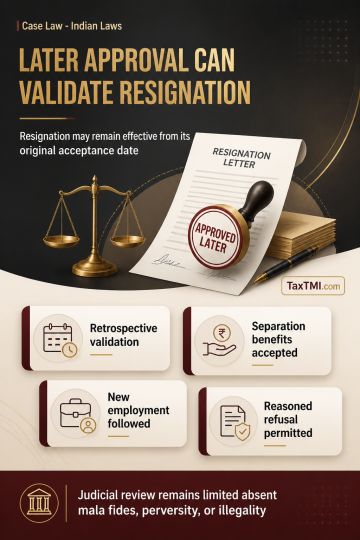
Ratification of resignation acceptance validates separation retrospectively, while withdrawal may be refused through reasoned administrative discretio...
Nature-dependent electricity contracts receive new Ind AS accounting, hedge designation, transition and financial-statement disclosure requirements fr...
Alternative GST remedy permitted protective writ intervention for ex parte adjudication, preserving independent appellate review of input tax credit d...
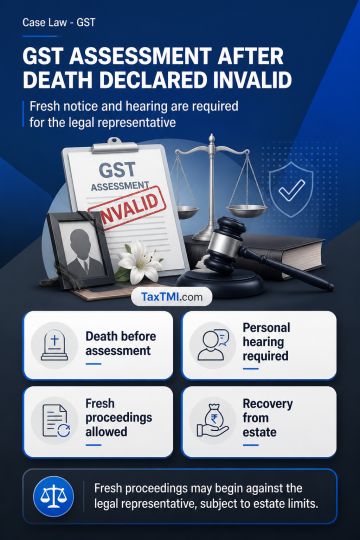
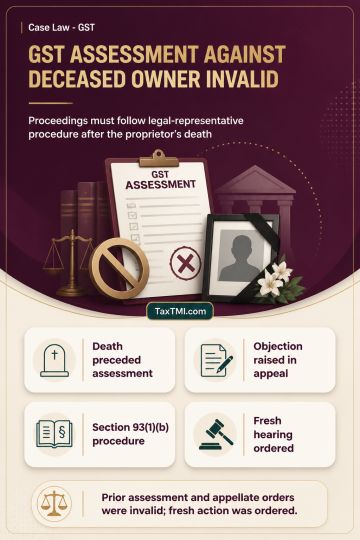
Assessment against deceased sole proprietor requires proceedings against the legal representative, rendering prior assessment and appellate orders inv...
Residential waste collection classification under SAC 999423 defeats composite-supply exemption where facilitating goods are not transferred to the lo...
Page of 4807
Press 'Enter' after typing page number.
301 to 320 of 96140 Results
❮
❯
❯❯
0 / 200
Expand Note
Add to Folder
No Folders have been created
+
Are you sure you want to delete "My most important" ?
In a prosecution under Section 132 of the CGST Act, the High Court held that pre-trial custody must remain exceptional because liberty cannot be curtailed on a punitive basis before conviction. Bail was granted after noting that the maximum sentence was five years, the matter was triable by a Magistrate, investigation was complete, complaint had been filed, there was no criminal antecedent or material showing risk of tampering, intimidation, flight, or non-cooperation, and the case was largely documentary. The Court also considered that charge had not been framed and trial was unlikely to conclude soon, so continued detention would amount to punitive custody rather than securing the trial.
In a prosecution under Section 132 of the CGST Act, the High Court held that pre-trial custody must remain exceptional because liberty cannot be curtailed on a punitive basis before conviction. Bail was granted after noting that the maximum sentence was five years, the matter was triable by a Magistrate, investigation was complete, complaint had been filed, there was no criminal antecedent or material showing risk of tampering, intimidation, flight, or non-cooperation, and the case was largely documentary. The Court also considered that charge had not been framed and trial was unlikely to conclude soon, so continued detention would amount to punitive custody rather than securing the trial.
Note: It is a system-generated summary and is for quick reference only.
 TaxTMI
  TaxTMI
 of 4807
















 Join Channel