Anonymous donation classification fails where charitable trusts maintain undisputed donor identity records and evidence corpus contributions' intended...
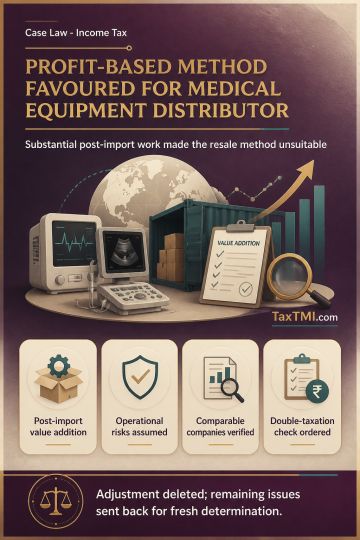
Transfer pricing method selection favours TNMM where medical-equipment distribution involves substantial post-import value addition and operational ri...
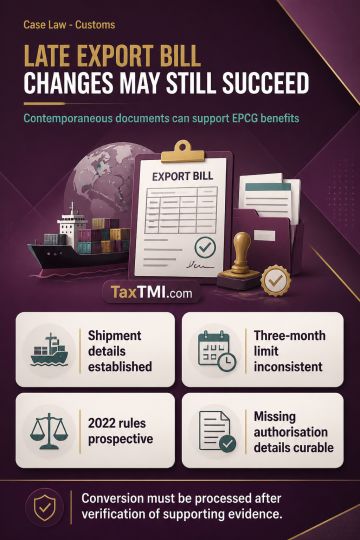
Post-export shipping bill conversion remains available where contemporaneous evidence supports EPCG benefits despite curable procedural omissions and ...
In a prosecution under Section 132 of the CGST Act, the High Court held that pre-trial custody must remain exceptional because liberty cannot be curtailed on a punitive basis before conviction. Bail was granted after noting that the maximum sentence was five years, the matter was triable by a Magistrate, investigation was complete, complaint had been filed, there was no criminal antecedent or material showing risk of tampering, intimidation, flight, or non-cooperation, and the case was largely documentary. The Court also considered that charge had not been framed and trial was unlikely to conclude soon, so continued detention would amount to punitive custody rather than securing the trial.
In a prosecution under Section 132 of the CGST Act, the High Court held that pre-trial custody must remain exceptional because liberty cannot be curtailed on a punitive basis before conviction. Bail was granted after noting that the maximum sentence was five years, the matter was triable by a Magistrate, investigation was complete, complaint had been filed, there was no criminal antecedent or material showing risk of tampering, intimidation, flight, or non-cooperation, and the case was largely documentary. The Court also considered that charge had not been framed and trial was unlikely to conclude soon, so continued detention would amount to punitive custody rather than securing the trial.
Note: It is a system-generated summary and is for quick reference only.
 TaxTMI
  TaxTMI
 of 4807

















 Join Channel


