Development agreements require legal possession or effective enjoyment for capital gains transfer; permissive possession and deferred consideration de...
Prolonged sterilisation of development rights supports capital-gains treatment, while business-income disallowances cannot govern capital-gains comput...
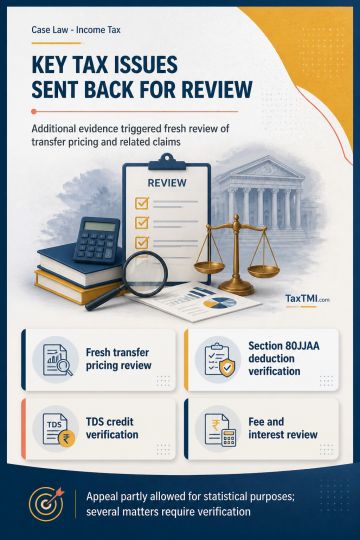
Additional evidence in transfer pricing dispute leads to fresh examination, while tax deductions, TDS credit, fee and refund interest require verifica...
Category II AIF pass-through taxation preserves non-business income character; investment receipts cannot be reclassified without applying recognised ...
HC held that cancellation of GST registration and rejection of the revocation application were vitiated by breach of natural justice. The authority had invited and received a reply but rejected it by a cryptic order without addressing the defence or recording reasons, making the decision arbitrary and non-speaking. The cancellation and revocation notices were also defective because the hearing date was fixed before expiry of the time granted to reply, denying a meaningful opportunity of hearing. Although the general rule favours the statutory appellate remedy, writ jurisdiction under Article 226 remained available where the impugned orders were patently illegal, arbitrary, or passed without fair hearing. The impugned orders were set aside and the writ petition was entertained.
HC held that cancellation of GST registration and rejection of the revocation application were vitiated by breach of natural justice. The authority had invited and received a reply but rejected it by a cryptic order without addressing the defence or recording reasons, making the decision arbitrary and non-speaking. The cancellation and revocation notices were also defective because the hearing date was fixed before expiry of the time granted to reply, denying a meaningful opportunity of hearing. Although the general rule favours the statutory appellate remedy, writ jurisdiction under Article 226 remained available where the impugned orders were patently illegal, arbitrary, or passed without fair hearing. The impugned orders were set aside and the writ petition was entertained.
Note: It is a system-generated summary and is for quick reference only.
 TaxTMI
 of 4801


















 Join Channel


 TaxTMI