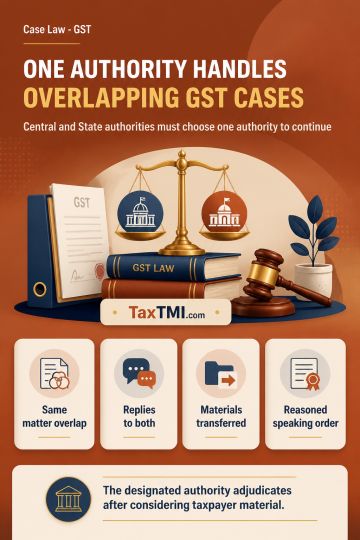
Overlapping GST proceedings require Central and State authorities to designate one competent authority for coordinated adjudication of the same matter...
Composite healthcare supplies retain exemption when patient care is the contract's essential character, despite payment through an implementing agency...
Receipt of immovable property requires actual possession or enjoyment; redevelopment allotments exchanged for tenancy rights fall outside deemed incom...
Section 80P deduction covers Souharda credit societies, including qualifying surplus-deposit interest, subject to member KYC verification for cash dep...
HC held that cancellation of GST registration and rejection of the revocation application were vitiated by breach of natural justice. The authority had invited and received a reply but rejected it by a cryptic order without addressing the defence or recording reasons, making the decision arbitrary and non-speaking. The cancellation and revocation notices were also defective because the hearing date was fixed before expiry of the time granted to reply, denying a meaningful opportunity of hearing. Although the general rule favours the statutory appellate remedy, writ jurisdiction under Article 226 remained available where the impugned orders were patently illegal, arbitrary, or passed without fair hearing. The impugned orders were set aside and the writ petition was entertained.
HC held that cancellation of GST registration and rejection of the revocation application were vitiated by breach of natural justice. The authority had invited and received a reply but rejected it by a cryptic order without addressing the defence or recording reasons, making the decision arbitrary and non-speaking. The cancellation and revocation notices were also defective because the hearing date was fixed before expiry of the time granted to reply, denying a meaningful opportunity of hearing. Although the general rule favours the statutory appellate remedy, writ jurisdiction under Article 226 remained available where the impugned orders were patently illegal, arbitrary, or passed without fair hearing. The impugned orders were set aside and the writ petition was entertained.
Note: It is a system-generated summary and is for quick reference only.
 TaxTMI
 of 4803


















 Join Channel


 TaxTMI