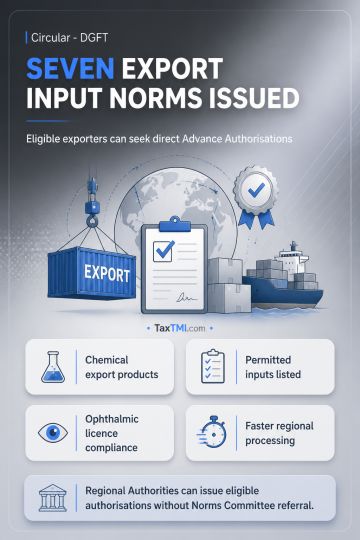
Transfer pricing comparability requires functional alignment, reliable financial data, and careful review of working capital and receivables adjustmen...
Transfer pricing rules require benchmarking corporate guarantees and associated-enterprise advances, while invalid domestic-transaction adjustments ca...
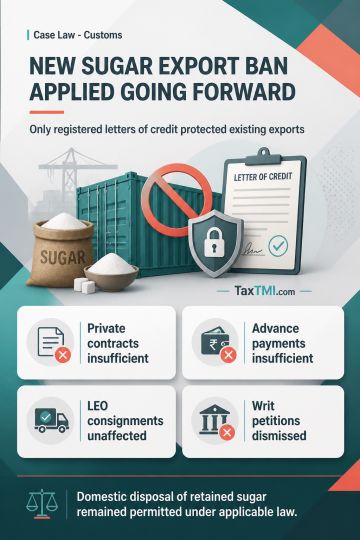
Prospective sugar export prohibition required registered letters of credit; private contracts and export quotas created no enforceable continuation ri...
Retroactive interim-moratorium exclusion permits protective asset disclosure and preservation measures against personal guarantors pending arbitration...
HC held that cancellation of GST registration and rejection of the revocation application were vitiated by breach of natural justice. The authority had invited and received a reply but rejected it by a cryptic order without addressing the defence or recording reasons, making the decision arbitrary and non-speaking. The cancellation and revocation notices were also defective because the hearing date was fixed before expiry of the time granted to reply, denying a meaningful opportunity of hearing. Although the general rule favours the statutory appellate remedy, writ jurisdiction under Article 226 remained available where the impugned orders were patently illegal, arbitrary, or passed without fair hearing. The impugned orders were set aside and the writ petition was entertained.
HC held that cancellation of GST registration and rejection of the revocation application were vitiated by breach of natural justice. The authority had invited and received a reply but rejected it by a cryptic order without addressing the defence or recording reasons, making the decision arbitrary and non-speaking. The cancellation and revocation notices were also defective because the hearing date was fixed before expiry of the time granted to reply, denying a meaningful opportunity of hearing. Although the general rule favours the statutory appellate remedy, writ jurisdiction under Article 226 remained available where the impugned orders were patently illegal, arbitrary, or passed without fair hearing. The impugned orders were set aside and the writ petition was entertained.
Note: It is a system-generated summary and is for quick reference only.
 TaxTMI
 of 4805













 Join Channel


 TaxTMI