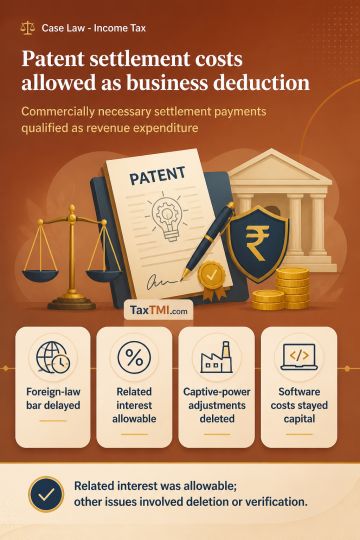
Patent-settlement expenditure treated as commercially expedient revenue outlay, with foreign-law restrictions inapplicable before the prospective amen...
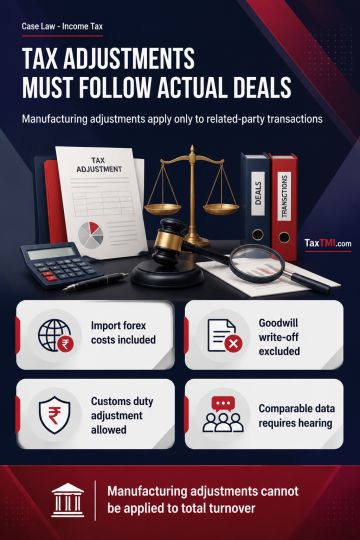
International transaction benchmarking restricts transfer pricing adjustments to associated-enterprise dealings, while functional comparability govern...
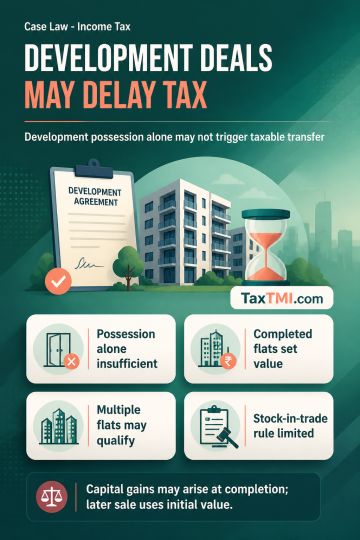
Joint development agreements defer taxable transfer where possession lacks part performance, while completed flats determine consideration and exempti...
Passenger baggage re-export requires true declaration and cannot be granted indirectly through discretionary redemption of undeclared prohibited goods...
HC held that cancellation of GST registration and rejection of the revocation application were vitiated by breach of natural justice. The authority had invited and received a reply but rejected it by a cryptic order without addressing the defence or recording reasons, making the decision arbitrary and non-speaking. The cancellation and revocation notices were also defective because the hearing date was fixed before expiry of the time granted to reply, denying a meaningful opportunity of hearing. Although the general rule favours the statutory appellate remedy, writ jurisdiction under Article 226 remained available where the impugned orders were patently illegal, arbitrary, or passed without fair hearing. The impugned orders were set aside and the writ petition was entertained.
HC held that cancellation of GST registration and rejection of the revocation application were vitiated by breach of natural justice. The authority had invited and received a reply but rejected it by a cryptic order without addressing the defence or recording reasons, making the decision arbitrary and non-speaking. The cancellation and revocation notices were also defective because the hearing date was fixed before expiry of the time granted to reply, denying a meaningful opportunity of hearing. Although the general rule favours the statutory appellate remedy, writ jurisdiction under Article 226 remained available where the impugned orders were patently illegal, arbitrary, or passed without fair hearing. The impugned orders were set aside and the writ petition was entertained.
Note: It is a system-generated summary and is for quick reference only.
 TaxTMI
 of 4805
















 Join Channel


 TaxTMI
