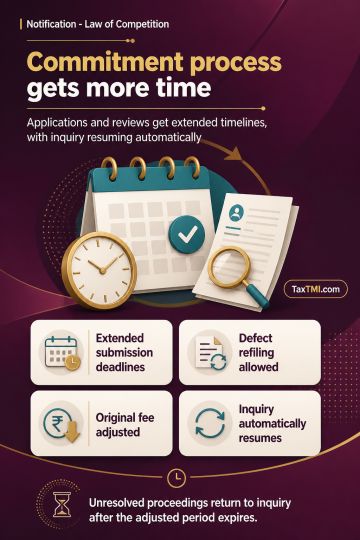
Commitment proceedings gain extended timelines, structured defect refiling, and automatic resumption of inquiry after the adjusted completion period e...
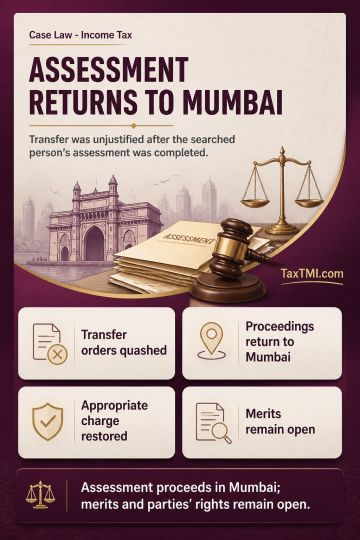
Centralised assessment transfer becomes unwarranted once the searched person's assessment is complete, requiring restoration to the appropriate charge...
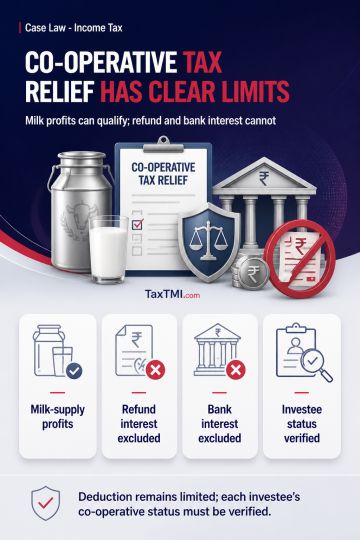
Co-operative deduction eligibility excludes refund and commercial-bank interest, while qualifying co-operative investments require entity-wise verific...
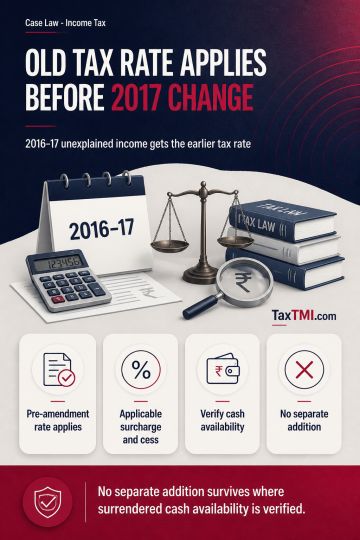
Enhanced tax rate on surrendered unexplained income applies prospectively, while cash-deposit telescoping requires verification of available surrender...
Page of 4807
Press 'Enter' after typing page number.
141 to 160 of 96140 Results
❮
❯
❯❯
0 / 200
Expand Note
Add to Folder
No Folders have been created
+
Are you sure you want to delete "My most important" ?
Equalisation levy was held inapplicable to reimbursement paid by an Indian petitioner to its overseas subsidiary for online advertising services obtained from Google USA, because the charging provisions in Sections 164 and 165 of the Finance Act, 2016 apply only to consideration for a specified service received or receivable by a non-resident from a resident in India or from a non-resident with a permanent establishment in India. The Court declined to expand the levy by inference or substance-over-form reasoning, and held that reimbursement was not part of the statutory definition. It further held that the corporate veil could not be pierced absent evidence of impropriety or a sham structure, and that survey statements had no independent probative value to fasten liability.
Equalisation levy was held inapplicable to reimbursement paid by an Indian petitioner to its overseas subsidiary for online advertising services obtained from Google USA, because the charging provisions in Sections 164 and 165 of the Finance Act, 2016 apply only to consideration for a specified service received or receivable by a non-resident from a resident in India or from a non-resident with a permanent establishment in India. The Court declined to expand the levy by inference or substance-over-form reasoning, and held that reimbursement was not part of the statutory definition. It further held that the corporate veil could not be pierced absent evidence of impropriety or a sham structure, and that survey statements had no independent probative value to fasten liability.
Note: It is a system-generated summary and is for quick reference only.
 TaxTMI
  TaxTMI
 of 4807







 Join Channel