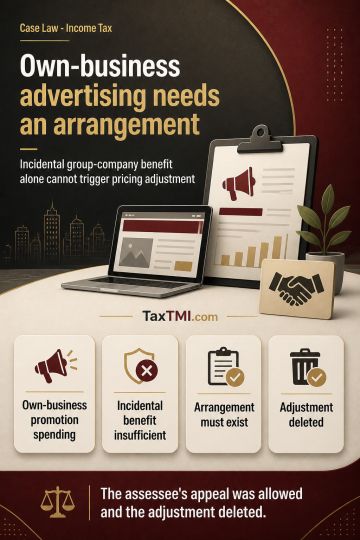
AMP expenditure for own business is not an international transaction without an associated-enterprise arrangement, eliminating transfer pricing adjust...
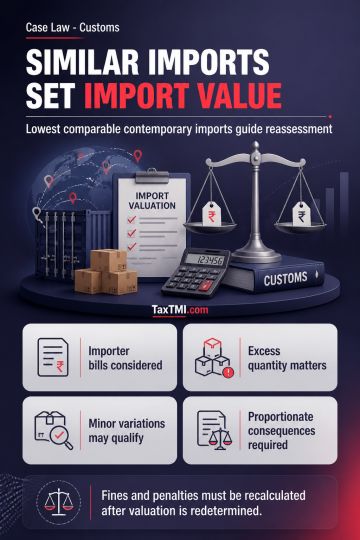
Customs valuation must use comparable contemporary imports, while confiscation fines and penalties require proportionate recalculation on reassessed v...
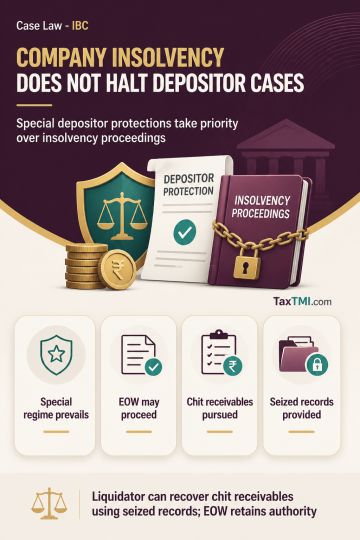
Depositor-protection proceedings prevail over corporate insolvency, while liquidators may recover chit receivables using copies of seized company reco...
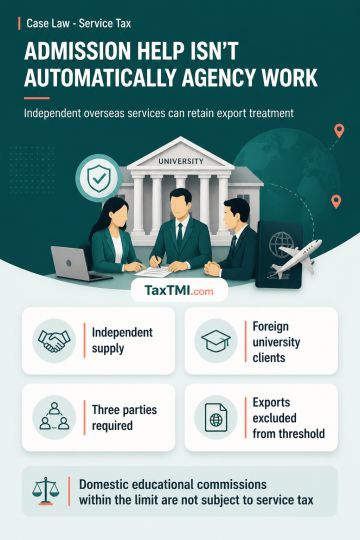
Intermediary service classification fails where overseas admission facilitation is supplied independently, preserving export treatment and small-provi...
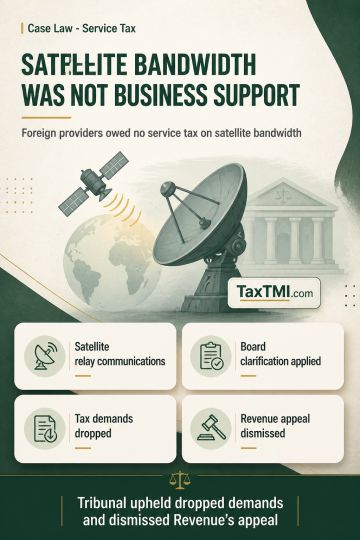
Satellite transponder bandwidth is telecommunication, not Business Support Service; foreign non-telegraph providers triggered no service tax liability...
Equalisation levy was held inapplicable to reimbursement paid by an Indian petitioner to its overseas subsidiary for online advertising services obtained from Google USA, because the charging provisions in Sections 164 and 165 of the Finance Act, 2016 apply only to consideration for a specified service received or receivable by a non-resident from a resident in India or from a non-resident with a permanent establishment in India. The Court declined to expand the levy by inference or substance-over-form reasoning, and held that reimbursement was not part of the statutory definition. It further held that the corporate veil could not be pierced absent evidence of impropriety or a sham structure, and that survey statements had no independent probative value to fasten liability.
Equalisation levy was held inapplicable to reimbursement paid by an Indian petitioner to its overseas subsidiary for online advertising services obtained from Google USA, because the charging provisions in Sections 164 and 165 of the Finance Act, 2016 apply only to consideration for a specified service received or receivable by a non-resident from a resident in India or from a non-resident with a permanent establishment in India. The Court declined to expand the levy by inference or substance-over-form reasoning, and held that reimbursement was not part of the statutory definition. It further held that the corporate veil could not be pierced absent evidence of impropriety or a sham structure, and that survey statements had no independent probative value to fasten liability.
Note: It is a system-generated summary and is for quick reference only.
 TaxTMI
  TaxTMI
 of 4807



 Join Channel


