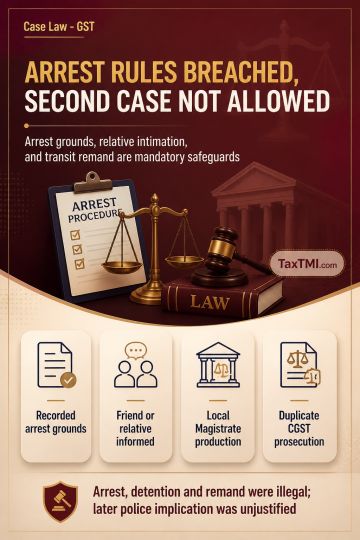
Arrest safeguards require disclosed grounds, relative intimation and transit remand, while duplicate prosecution under the CGST framework is unsustain...
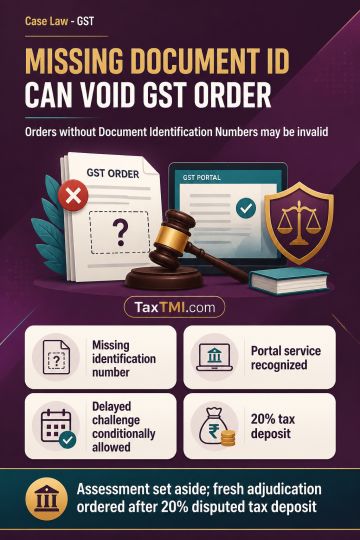
Document Identification Number defects can invalidate GST assessments, with delayed challenges entertained conditionally where patent irregularities e...
Windmill commissioning evidence supported higher depreciation where grid connection and electricity generation proved operational use before the relev...
Pharmaceutical promotion and transfer-pricing comparability principles limited disallowances, while uncorroborated search allegations and unsupported ...
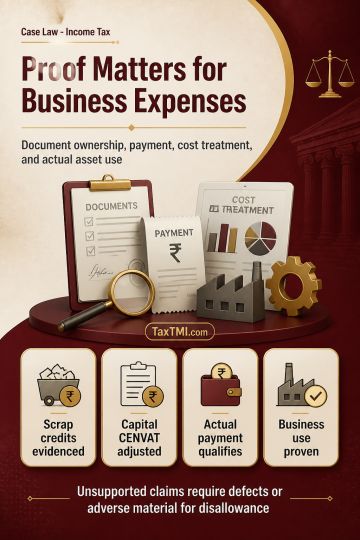
Business expenditure substantiation supports scrap credits, statutory payments and expense claims, while depreciation requires proof of actual busines...
Equalisation levy was held inapplicable to reimbursement paid by an Indian petitioner to its overseas subsidiary for online advertising services obtained from Google USA, because the charging provisions in Sections 164 and 165 of the Finance Act, 2016 apply only to consideration for a specified service received or receivable by a non-resident from a resident in India or from a non-resident with a permanent establishment in India. The Court declined to expand the levy by inference or substance-over-form reasoning, and held that reimbursement was not part of the statutory definition. It further held that the corporate veil could not be pierced absent evidence of impropriety or a sham structure, and that survey statements had no independent probative value to fasten liability.
Equalisation levy was held inapplicable to reimbursement paid by an Indian petitioner to its overseas subsidiary for online advertising services obtained from Google USA, because the charging provisions in Sections 164 and 165 of the Finance Act, 2016 apply only to consideration for a specified service received or receivable by a non-resident from a resident in India or from a non-resident with a permanent establishment in India. The Court declined to expand the levy by inference or substance-over-form reasoning, and held that reimbursement was not part of the statutory definition. It further held that the corporate veil could not be pierced absent evidence of impropriety or a sham structure, and that survey statements had no independent probative value to fasten liability.
Note: It is a system-generated summary and is for quick reference only.
 TaxTMI
 of 4805
















 Join Channel


 TaxTMI