Exempt-income expenditure disallowance is confined to investments that actually generated exempt income, while supported business expenses remain dedu...
Objective characteristics and principal use govern mining-tyre classification, while fresh advance ruling applications may rely on additional technica...
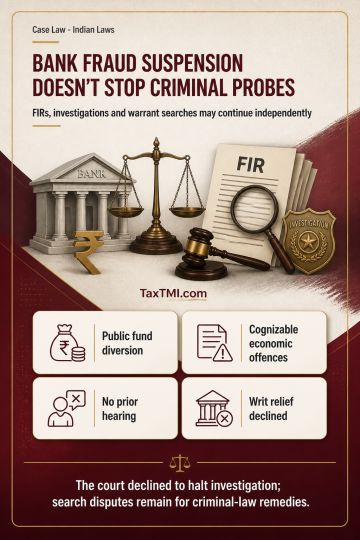
Administrative fraud classification suspension does not halt independent criminal investigation or warrant-based searches into alleged economic offenc...
Acceptance or repayment of loans through journal entries was treated as a violation of the statutory requirement to use recognised banking modes, attracting exposure to penalty under sections 271D and 271E. The Tribunal held that immunity under section 273B is available only where the assessee proves reasonable cause, and on the facts no compelling business necessity, unavoidable circumstance, or contemporaneous material was shown to justify bypassing normal banking channels. Mere assertions of bona fides, genuineness, or convenience were found insufficient. The penalties were therefore upheld and the appeals were dismissed.
Acceptance or repayment of loans through journal entries was treated as a violation of the statutory requirement to use recognised banking modes, attracting exposure to penalty under sections 271D and 271E. The Tribunal held that immunity under section 273B is available only where the assessee proves reasonable cause, and on the facts no compelling business necessity, unavoidable circumstance, or contemporaneous material was shown to justify bypassing normal banking channels. Mere assertions of bona fides, genuineness, or convenience were found insufficient. The penalties were therefore upheld and the appeals were dismissed.
Note: It is a system-generated summary and is for quick reference only.
 TaxTMI
 of 4805


















 Join Channel


 TaxTMI