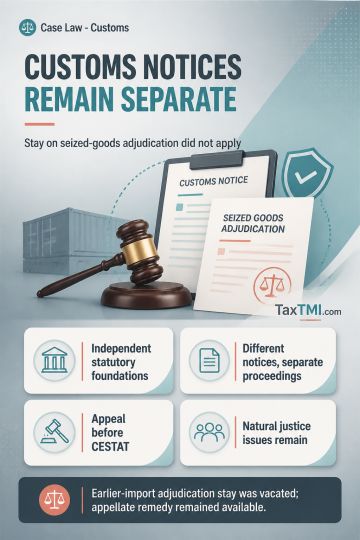
Independent show-cause notices remain separate proceedings, while customs adjudication challenges should ordinarily follow the statutory appellate rem...
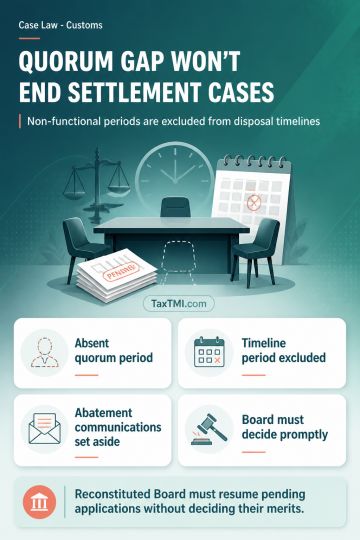
Institutional incapacity in customs settlement proceedings excludes non-functional quorum periods from statutory disposal timelines, preventing automa...
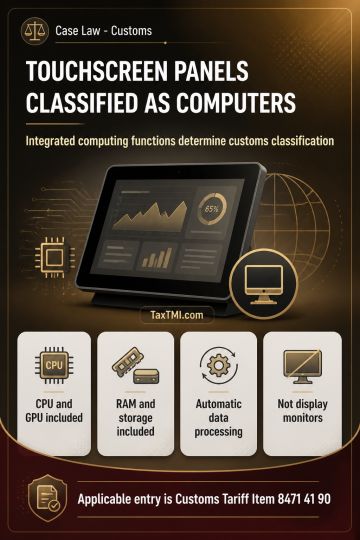
Interactive touchscreen panels with integrated computing functions fall under automatic data-processing machines rather than display monitors for cust...
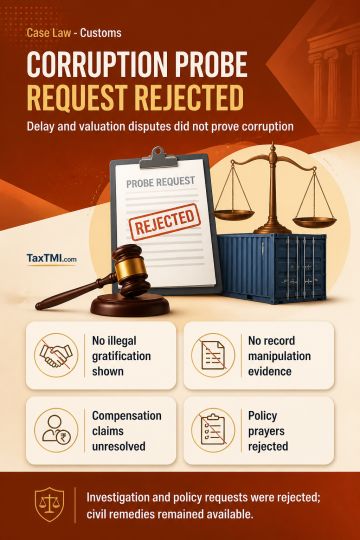
Ex parte injunction service requirements were substantially met, while civil recovery and SFIO investigation into provident fund defalcation continued...
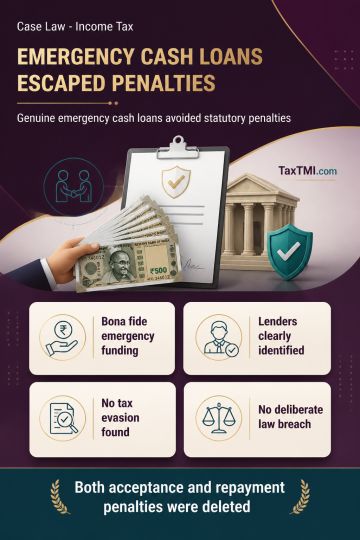
Acceptance or repayment of loans through journal entries was treated as a violation of the statutory requirement to use recognised banking modes, attracting exposure to penalty under sections 271D and 271E. The Tribunal held that immunity under section 273B is available only where the assessee proves reasonable cause, and on the facts no compelling business necessity, unavoidable circumstance, or contemporaneous material was shown to justify bypassing normal banking channels. Mere assertions of bona fides, genuineness, or convenience were found insufficient. The penalties were therefore upheld and the appeals were dismissed.
Acceptance or repayment of loans through journal entries was treated as a violation of the statutory requirement to use recognised banking modes, attracting exposure to penalty under sections 271D and 271E. The Tribunal held that immunity under section 273B is available only where the assessee proves reasonable cause, and on the facts no compelling business necessity, unavoidable circumstance, or contemporaneous material was shown to justify bypassing normal banking channels. Mere assertions of bona fides, genuineness, or convenience were found insufficient. The penalties were therefore upheld and the appeals were dismissed.
Note: It is a system-generated summary and is for quick reference only.
 TaxTMI
 of 4805










 Join Channel


 TaxTMI