Transfer pricing and tax deductions upheld on established principles, while employee contributions and warranty provisions returned for fresh examinat...
Captive transfer pricing relies on industrial consumer tariffs, while genuine quotations can benchmark effluent treatment transfers under the Other Me...
Specific tariff classification for ophthalmic instruments and extended limitation principles determine the treatment of duty demands, confiscation, an...
Integrated golf function determines classification, placing launch monitors and simulators under other golf equipment rather than measuring instrument...
Public servant status under anti-corruption law extends to recognised stock exchange leadership; constitutional and sanction challenges do not succeed...
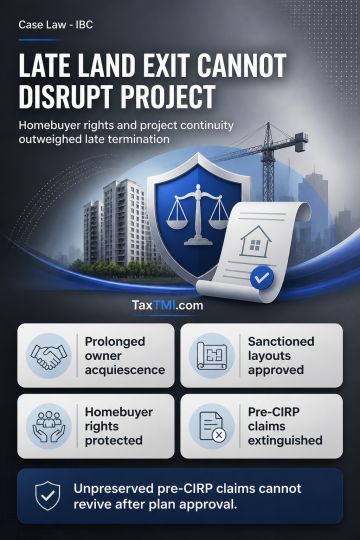
Acquiescence, homebuyer protection and clean-slate resolution principles prevent landowners from disrupting an integrated project through late termina...
Revision under section 263 cannot be sustained on grounds not set out in the show cause notice, and the Principal Commissioner cannot introduce a fresh allegation of non-verification of expenses at the revision stage without confronting the assessee. The article also explains that a transfer of an outstanding loan balance by journal entry under a tripartite arrangement is not an actual repayment of loan, so the alleged breach of section 269T and penalty under section 271E did not arise. Where the Assessing Officer had already made enquiries and recorded the assessee's explanation, revision could not rest on a mere view that the enquiry was inadequate. In the absence of a demonstrated error causing prejudice to the Revenue, section 263 was held inapplicable.
Revision under section 263 cannot be sustained on grounds not set out in the show cause notice, and the Principal Commissioner cannot introduce a fresh allegation of non-verification of expenses at the revision stage without confronting the assessee. The article also explains that a transfer of an outstanding loan balance by journal entry under a tripartite arrangement is not an actual repayment of loan, so the alleged breach of section 269T and penalty under section 271E did not arise. Where the Assessing Officer had already made enquiries and recorded the assessee's explanation, revision could not rest on a mere view that the enquiry was inadequate. In the absence of a demonstrated error causing prejudice to the Revenue, section 263 was held inapplicable.
Note: It is a system-generated summary and is for quick reference only.
 TaxTMI
 of 4803













 Join Channel


 TaxTMI