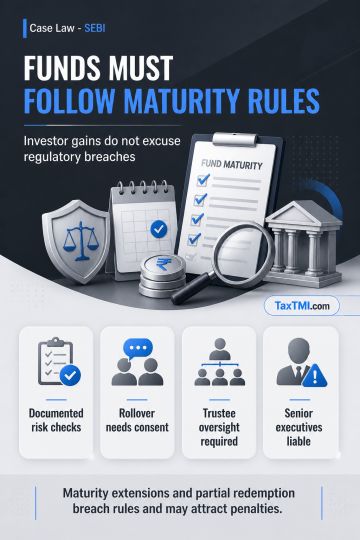
Mutual fund maturity rules require proper rollover, redemption, disclosure, and due diligence; investor gains cannot excuse regulatory breaches or pen...
Threshold exemption excludes exempt services, while stamp-paper purchases avoid reverse charge; consequential service tax penalties were also set asid...
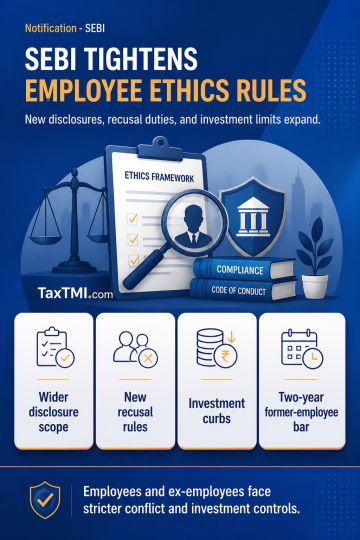
Employee conflict disclosures and investment restrictions expand with new recusal duties, post-employment limits, and compliance reporting requirement...
Whistleblower reward received from the U.S. Securities and Exchange Commission was held taxable as income, because section 2(24) is of wide amplitude and the payment arose from arranged pursuit of whistleblower claims, legal assistance on success-fee terms, collection of material, filing of the complaint, and cooperation in the investigation. The Tribunal found a clear element of expectation and quid pro quo, so the receipt was neither gratuitous nor a windfall or capital receipt. It further held that the one-time character of the payment did not make it capital, and that the amount was at least taxable as income from other sources under section 56(1).
Whistleblower reward received from the U.S. Securities and Exchange Commission was held taxable as income, because section 2(24) is of wide amplitude and the payment arose from arranged pursuit of whistleblower claims, legal assistance on success-fee terms, collection of material, filing of the complaint, and cooperation in the investigation. The Tribunal found a clear element of expectation and quid pro quo, so the receipt was neither gratuitous nor a windfall or capital receipt. It further held that the one-time character of the payment did not make it capital, and that the amount was at least taxable as income from other sources under section 56(1).
Note: It is a system-generated summary and is for quick reference only.
 TaxTMI
 of 4801











 Join Channel


 TaxTMI
