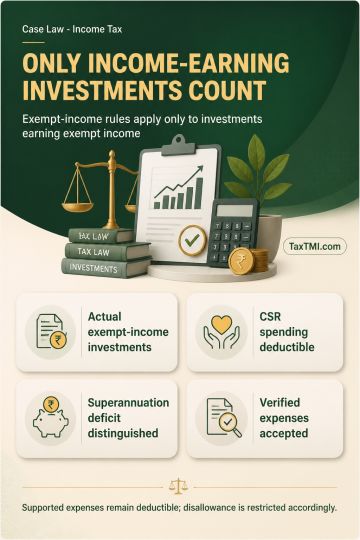
Exempt-income expenditure disallowance is confined to investments that actually generated exempt income, while supported business expenses remain dedu...
Objective characteristics and principal use govern mining-tyre classification, while fresh advance ruling applications may rely on additional technica...
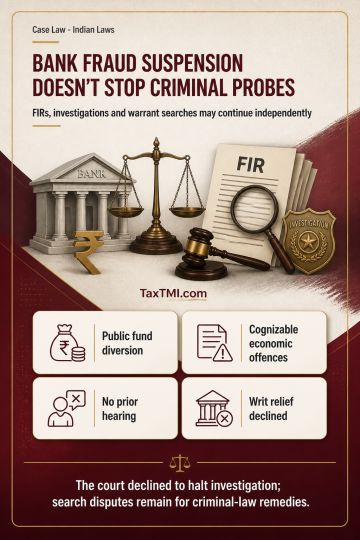
Administrative fraud classification suspension does not halt independent criminal investigation or warrant-based searches into alleged economic offenc...
Whistleblower reward received from the U.S. Securities and Exchange Commission was held taxable as income, because section 2(24) is of wide amplitude and the payment arose from arranged pursuit of whistleblower claims, legal assistance on success-fee terms, collection of material, filing of the complaint, and cooperation in the investigation. The Tribunal found a clear element of expectation and quid pro quo, so the receipt was neither gratuitous nor a windfall or capital receipt. It further held that the one-time character of the payment did not make it capital, and that the amount was at least taxable as income from other sources under section 56(1).
Whistleblower reward received from the U.S. Securities and Exchange Commission was held taxable as income, because section 2(24) is of wide amplitude and the payment arose from arranged pursuit of whistleblower claims, legal assistance on success-fee terms, collection of material, filing of the complaint, and cooperation in the investigation. The Tribunal found a clear element of expectation and quid pro quo, so the receipt was neither gratuitous nor a windfall or capital receipt. It further held that the one-time character of the payment did not make it capital, and that the amount was at least taxable as income from other sources under section 56(1).
Note: It is a system-generated summary and is for quick reference only.
 TaxTMI
 of 4805















 Join Channel


 TaxTMI