Jurisdictional facts in certificate-of-origin discrepancies can support customs show-cause proceedings, leaving factual explanations for departmental ...
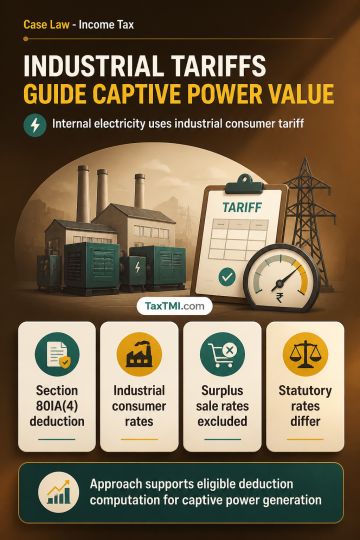
Market value for captive electricity consumption follows industrial consumer tariffs, supporting profit computation for the power generation deduction...
The AT held that enhanced compensation fraudulently received after the claimants' own enhancement proceedings had failed constituted proceeds of crime, and that later possession and projection of that money as untainted property fell within money-laundering under Section 3. It further held that where the tainted property is unavailable, equivalent value property may be attached under Section 2(1)(u), even if the attached asset is ancestral or was acquired earlier, so long as it represents equivalent value. The Tribunal also interpreted Section 5(1) to require only an apprehended likelihood of concealment or transfer, not proof of actual alienation, and upheld the provisional attachment orders.
The AT held that enhanced compensation fraudulently received after the claimants' own enhancement proceedings had failed constituted proceeds of crime, and that later possession and projection of that money as untainted property fell within money-laundering under Section 3. It further held that where the tainted property is unavailable, equivalent value property may be attached under Section 2(1)(u), even if the attached asset is ancestral or was acquired earlier, so long as it represents equivalent value. The Tribunal also interpreted Section 5(1) to require only an apprehended likelihood of concealment or transfer, not proof of actual alienation, and upheld the provisional attachment orders.
Note: It is a system-generated summary and is for quick reference only.
 TaxTMI
 of 4805



















 Join Channel


 TaxTMI