Online bond platforms may offer overseas-regulated products and tax-specific bonds subject to disclosures, compliance safeguards and revised complianc...
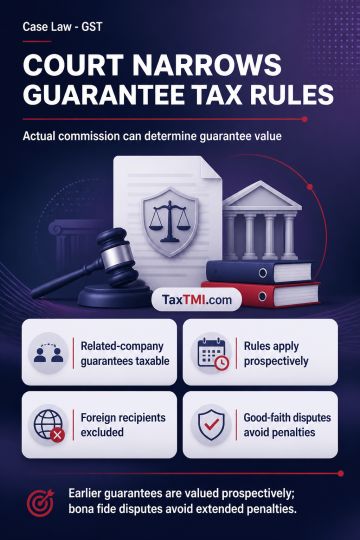
Corporate guarantee valuation permits actual ascertainable commission while barring retroactive application and extended-period penalties for bona fid...
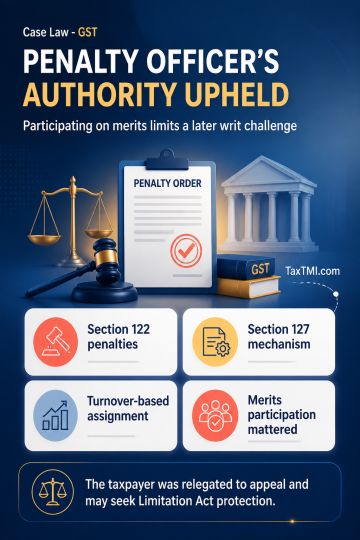
Proper-officer jurisdiction under UPGST penalty provisions upheld; participation on merits prevents bypassing the statutory appellate remedy through w...
Transitioned CENVAT credit may validly satisfy mandatory pre-deposit requirements for legacy service tax appeals through Electronic Credit Ledger debi...
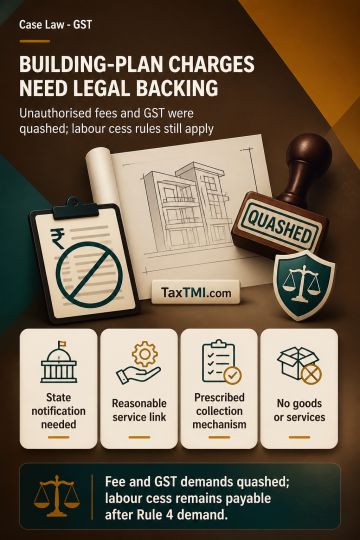
Building-plan sanction charges require statutory authority; unauthorised fees and GST were quashed, while labour cess must follow prescribed collectio...
Pure-agent exclusion fails where hotel booking facilitators receive third-party services themselves, making entire customer consideration taxable as r...
Transfer pricing requires evidence for AMP transactions, functionally reliable comparables, and appropriate aggregation or Berry Ratio benchmarking me...
Page of 4809
Press 'Enter' after typing page number.
301 to 320 of 96174 Results
❮
❯
❯❯
0 / 200
Expand Note
Add to Folder
No Folders have been created
+
Are you sure you want to delete "My most important" ?
Non-supply of the grounds of arrest and a mechanically passed remand order rendered the arrest, detention and judicial remand illegal under the CGST Act. Applying its earlier ruling in Hari Shankar Sharma, the HC noted that the arrest memo and record did not establish due service of the grounds of arrest, and that the remand court had acted without proper application of mind to the statutory and constitutional safeguards. It held that habeas corpus remained maintainable despite judicial remand where the remand itself was vitiated, quashed the remand order, and left the respondents free to proceed afresh in accordance with law.
Non-supply of the grounds of arrest and a mechanically passed remand order rendered the arrest, detention and judicial remand illegal under the CGST Act. Applying its earlier ruling in Hari Shankar Sharma, the HC noted that the arrest memo and record did not establish due service of the grounds of arrest, and that the remand court had acted without proper application of mind to the statutory and constitutional safeguards. It held that habeas corpus remained maintainable despite judicial remand where the remand itself was vitiated, quashed the remand order, and left the respondents free to proceed afresh in accordance with law.
Note: It is a system-generated summary and is for quick reference only.
 TaxTMI
  TaxTMI
 of 4809















 Join Channel