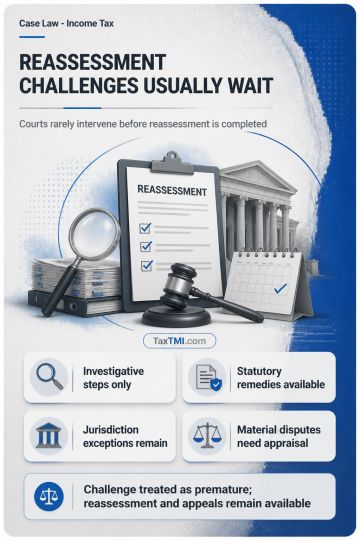
Preliminary reassessment proceedings generally require statutory remedies unless jurisdiction is wholly absent or mandatory conditions are patently br...
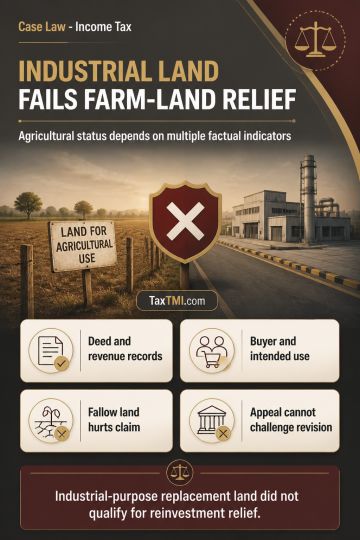
Agricultural land classification requires cumulative factual indicators, while industrial-purpose land and absent agricultural use defeat reinvestment...
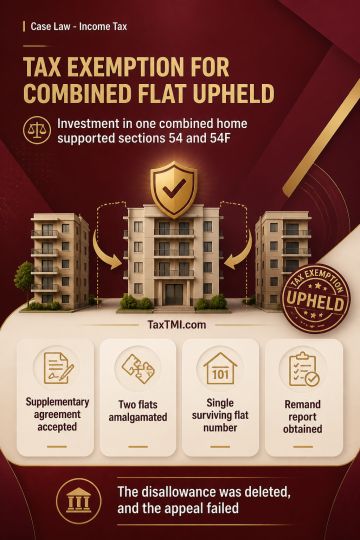
Composite residential flat exemption upheld where supplementary agreement merged adjoining units and additional evidence supported the taxpayer's inve...
ITAT held that exemption under section 11 could not be denied merely because the trust earned substantial receipts from letting out its hall and auditorium. Applying the dominant purpose test, it found the assessee's real activities to be structured education, scholarships, library and research work, and welfare measures for weaker sections, with the hall receipts used for maintenance and charitable programmes. The letting activity was only incidental and ancillary to the charitable objects, with no private profit or diversion shown. The proviso to section 2(15) and section 11(4A) were held inapplicable, and the Revenue's appeal was dismissed.
ITAT held that exemption under section 11 could not be denied merely because the trust earned substantial receipts from letting out its hall and auditorium. Applying the dominant purpose test, it found the assessee's real activities to be structured education, scholarships, library and research work, and welfare measures for weaker sections, with the hall receipts used for maintenance and charitable programmes. The letting activity was only incidental and ancillary to the charitable objects, with no private profit or diversion shown. The proviso to section 2(15) and section 11(4A) were held inapplicable, and the Revenue's appeal was dismissed.
Note: It is a system-generated summary and is for quick reference only.
 TaxTMI
  TaxTMI
 of 4814



 Join Channel