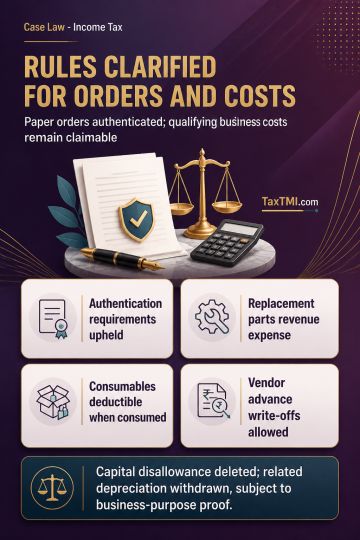
Authentication of paper assessment orders upheld, while qualifying repairs, consumables and vendor advance write-offs remain deductible business claim...
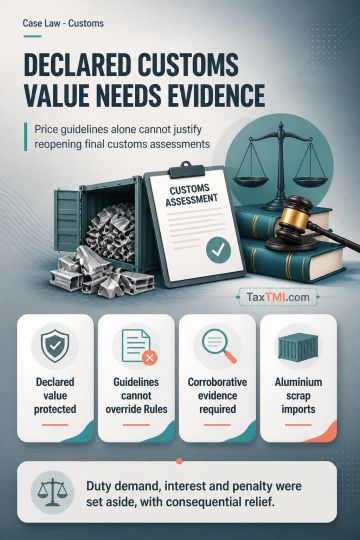
Transaction value cannot be rejected solely on non-statutory valuation guidelines without corroborative evidence supporting reassessment of final cust...
Cross-examination rights and corroborated evidence limit customs penalties for misdeclaration in genuine import transactions involving documented clea...
Page of 4807
Press 'Enter' after typing page number.
801 to 820 of 96136 Results
❮
❯
❯❯
0 / 200
Expand Note
Add to Folder
No Folders have been created
+
Are you sure you want to delete "My most important" ?
ITAT held that exemption under section 11 could not be denied merely because the trust earned substantial receipts from letting out its hall and auditorium. Applying the dominant purpose test, it found the assessee's real activities to be structured education, scholarships, library and research work, and welfare measures for weaker sections, with the hall receipts used for maintenance and charitable programmes. The letting activity was only incidental and ancillary to the charitable objects, with no private profit or diversion shown. The proviso to section 2(15) and section 11(4A) were held inapplicable, and the Revenue's appeal was dismissed.
ITAT held that exemption under section 11 could not be denied merely because the trust earned substantial receipts from letting out its hall and auditorium. Applying the dominant purpose test, it found the assessee's real activities to be structured education, scholarships, library and research work, and welfare measures for weaker sections, with the hall receipts used for maintenance and charitable programmes. The letting activity was only incidental and ancillary to the charitable objects, with no private profit or diversion shown. The proviso to section 2(15) and section 11(4A) were held inapplicable, and the Revenue's appeal was dismissed.
Note: It is a system-generated summary and is for quick reference only.
 TaxTMI
 of 4807






 Join Channel


 TaxTMI

