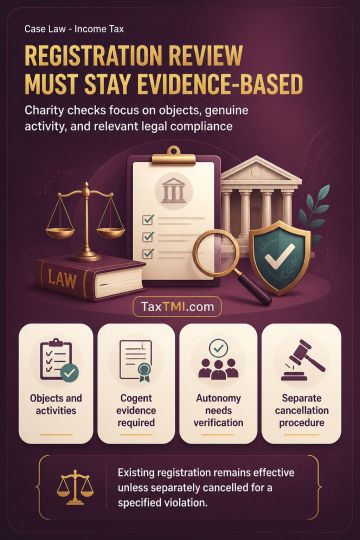
Specified regulatory authority income receives conditional tax exemption, subject to non-commercial activity, unchanged income character, and return f...
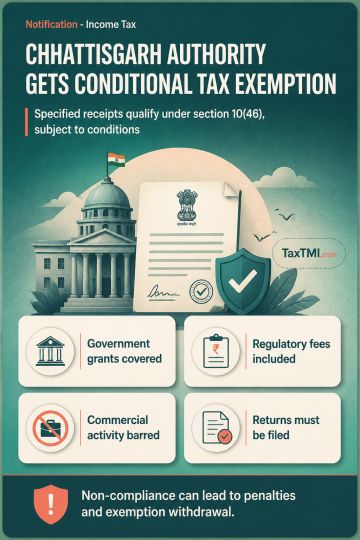
Tax exemption for regulatory authority income applies retrospectively, subject to non-commercial activity, unchanged income sources, and return-filing...
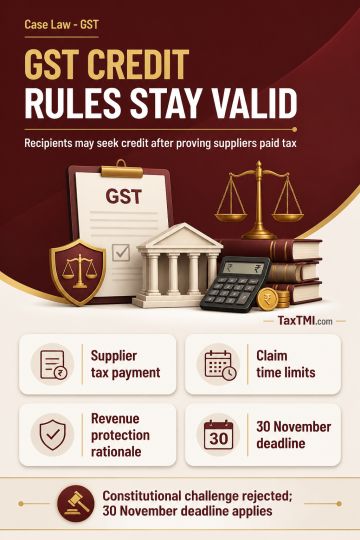
Input tax credit conditions remain constitutionally valid, with eligible recipient claims considered under GST circulars and retrospective filing dead...
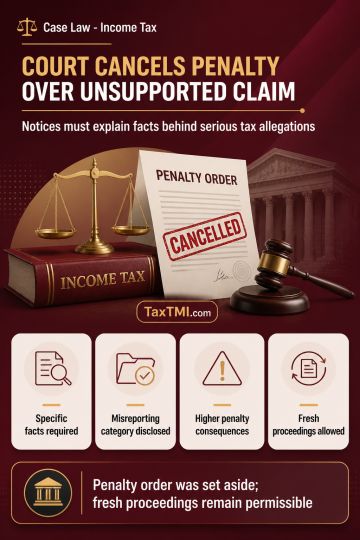
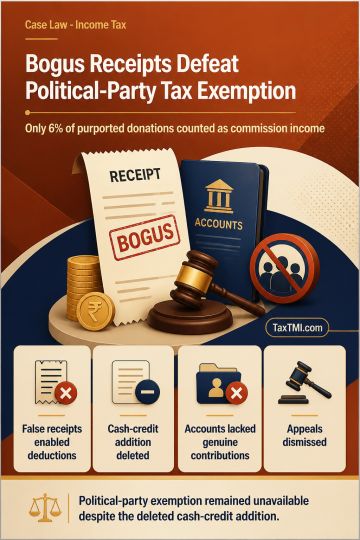
Bogus donation receipts justified commission income assessment and defeated political-party tax exemption for inaccurate accounts and reporting failur...
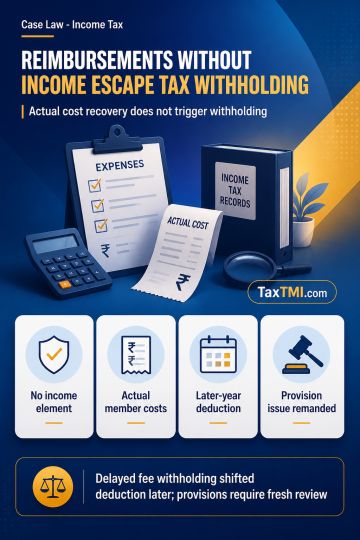
Pure reimbursement without income element escapes tax withholding, while delayed withholding and unsupported provisions face deferred or renewed scrut...
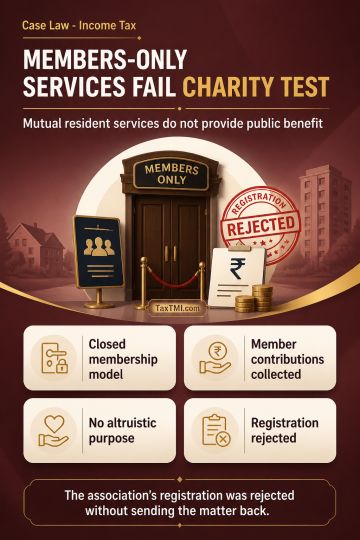
Public benefit requirement defeats charitable registration where residents' association services are reciprocal, member-only facilities governed by mu...
NCLAT upheld recall of the loan facilities under the material adverse effect clause, holding that the lender could contractually form the opinion that the arrest of a personal guarantor and criminal investigation were likely to affect performance, so the recall was valid. It also held that the Section 7 applications were maintainable despite a pending challenge to the arbitral award and parallel execution, because the pleaded default began on failure to repay after recall and continued thereafter; insolvency proceedings are not barred merely because recovery steps were also taken. The tribunal further held that the arbitral award gave rise to a fresh limitation period, so the application filed within three years was not time-barred.
NCLAT upheld recall of the loan facilities under the material adverse effect clause, holding that the lender could contractually form the opinion that the arrest of a personal guarantor and criminal investigation were likely to affect performance, so the recall was valid. It also held that the Section 7 applications were maintainable despite a pending challenge to the arbitral award and parallel execution, because the pleaded default began on failure to repay after recall and continued thereafter; insolvency proceedings are not barred merely because recovery steps were also taken. The tribunal further held that the arbitral award gave rise to a fresh limitation period, so the application filed within three years was not time-barred.
Note: It is a system-generated summary and is for quick reference only.
 TaxTMI
 of 4805







 Join Channel


 TaxTMI