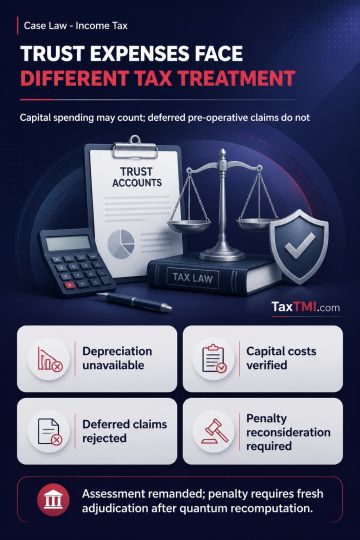
Charitable trust income application permits verified capital expenditure but rejects deferred pre-operative claims and requires reconsideration of con...
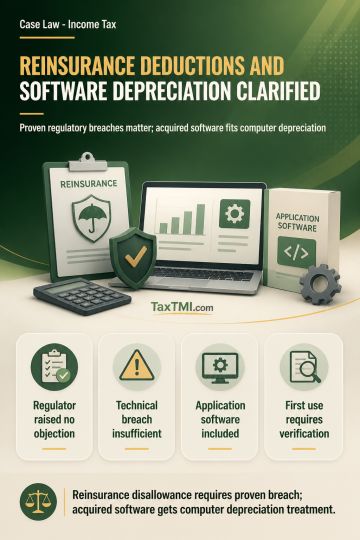
Reinsurance premium deductions require established regulatory breaches, while independently acquired software qualifies within the computer depreciati...
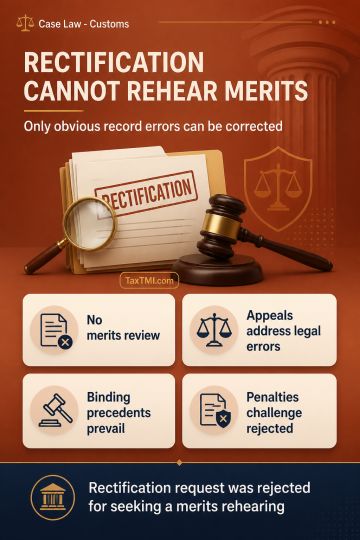
Rectification of mistake remains limited to self-evident record errors, preventing merits review through miscellaneous applications and preserving fin...
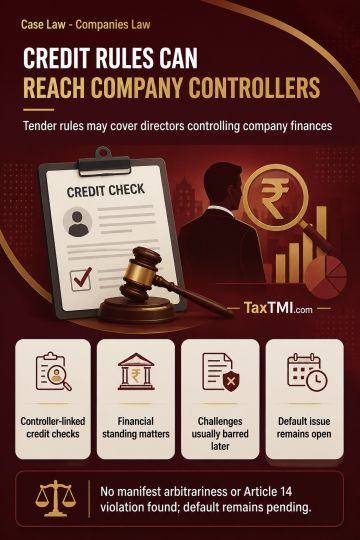
Tender creditworthiness conditions may extend to de facto Promoter Directors, with post-participation challenges generally barred absent arbitrariness...
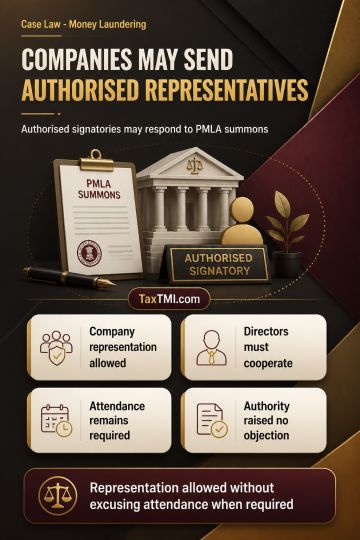
Corporate representation in PMLA summons proceedings permitted through an authorised signatory, subject to directors' continuing cooperation and atten...
For e-filed appeals under Section 61 of the IBC, limitation is computed from the date of e-filing, in line with the NCLAT's 24.12.2022 directions issued under the NCLAT Rules, 2016. The Tribunal rejected reliance on Delhi High Court e-filing rules because no material showed they applied to NCLAT. It applied the Supreme Court's view that a statutory day runs for 24 hours from midnight, so filing after office hours does not shift the filing date to the next working day. An appeal e-filed at 9.00 p.m. on the 45th day was therefore within the condonable period, and the 15-day delay was condoned.
For e-filed appeals under Section 61 of the IBC, limitation is computed from the date of e-filing, in line with the NCLAT's 24.12.2022 directions issued under the NCLAT Rules, 2016. The Tribunal rejected reliance on Delhi High Court e-filing rules because no material showed they applied to NCLAT. It applied the Supreme Court's view that a statutory day runs for 24 hours from midnight, so filing after office hours does not shift the filing date to the next working day. An appeal e-filed at 9.00 p.m. on the 45th day was therefore within the condonable period, and the 15-day delay was condoned.
Note: It is a system-generated summary and is for quick reference only.
 TaxTMI
  TaxTMI
 of 4807






 Join Channel


