Transaction value cannot be rejected solely on non-statutory valuation guidelines without corroborative evidence supporting reassessment of final cust...
Cross-examination rights and corroborated evidence limit customs penalties for misdeclaration in genuine import transactions involving documented clea...
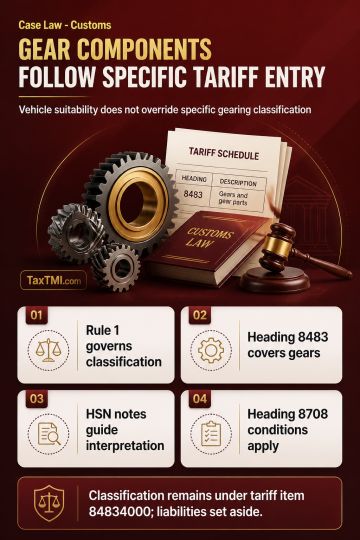
Tariff classification of vehicle gear components follows the specific gearing entry, displacing motor-vehicle parts classification and related liabili...
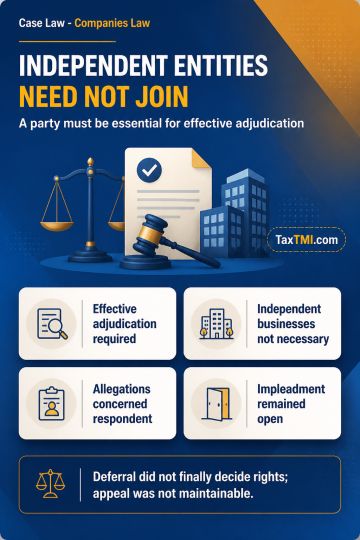
Necessary-party requirements limit impleadment of independent entities, while deferred consideration does not create an appealable adverse determinati...
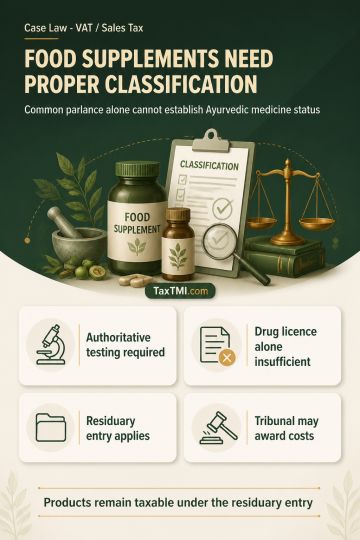
Food supplement classification requires common parlance and authoritative tests, preventing treatment as proprietary Ayurvedic medicines without suppo...
A scrutiny assessment challenge based on alleged non-compliance with CBDT scrutiny-selection instructions was rejected, the Tribunal following binding jurisdictional High Court precedent. The rent-related disallowance under section 40(a)(ia) was deleted to the extent tax was not deductible, including rent paid to Haryana Urban Development Authority. In the bogus purchase dispute, the Tribunal upheld partial relief and gross profit estimation at 2.37% on market-comparable reasoning, and applied the same approach to the connected unexplained expenditure issue. The estimated addition on sundry creditors was rejected because no individual credit entries were examined and the purchases stood accepted. The related-party salary disallowance under section 40A(2)(b) was also upheld as deleted on revenue-neutrality grounds.
A scrutiny assessment challenge based on alleged non-compliance with CBDT scrutiny-selection instructions was rejected, the Tribunal following binding jurisdictional High Court precedent. The rent-related disallowance under section 40(a)(ia) was deleted to the extent tax was not deductible, including rent paid to Haryana Urban Development Authority. In the bogus purchase dispute, the Tribunal upheld partial relief and gross profit estimation at 2.37% on market-comparable reasoning, and applied the same approach to the connected unexplained expenditure issue. The estimated addition on sundry creditors was rejected because no individual credit entries were examined and the purchases stood accepted. The related-party salary disallowance under section 40A(2)(b) was also upheld as deleted on revenue-neutrality grounds.
Note: It is a system-generated summary and is for quick reference only.
 TaxTMI
 of 4805














 Join Channel


 TaxTMI
