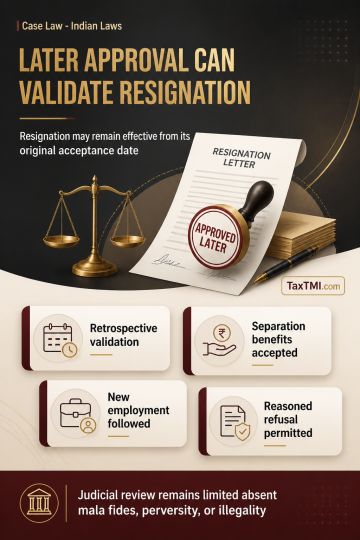
Ratification of resignation acceptance validates separation retrospectively, while withdrawal may be refused through reasoned administrative discretio...
Nature-dependent electricity contracts receive new Ind AS accounting, hedge designation, transition and financial-statement disclosure requirements fr...
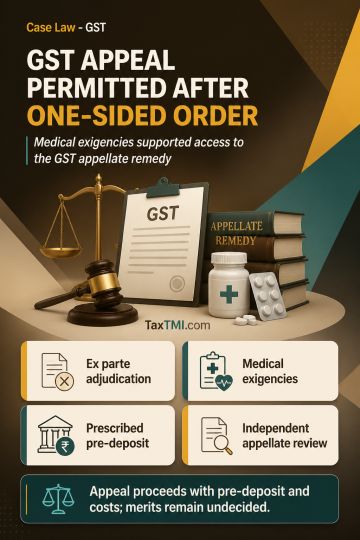
Alternative GST remedy permitted protective writ intervention for ex parte adjudication, preserving independent appellate review of input tax credit d...
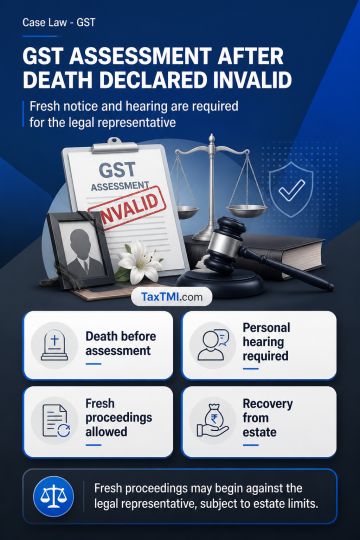
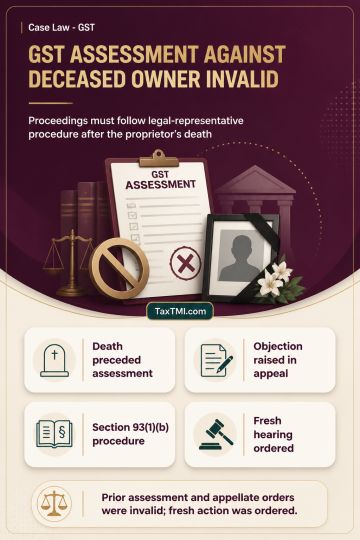
Assessment against deceased sole proprietor requires proceedings against the legal representative, rendering prior assessment and appellate orders inv...
Residential waste collection classification under SAC 999423 defeats composite-supply exemption where facilitating goods are not transferred to the lo...
A scrutiny assessment challenge based on alleged non-compliance with CBDT scrutiny-selection instructions was rejected, the Tribunal following binding jurisdictional High Court precedent. The rent-related disallowance under section 40(a)(ia) was deleted to the extent tax was not deductible, including rent paid to Haryana Urban Development Authority. In the bogus purchase dispute, the Tribunal upheld partial relief and gross profit estimation at 2.37% on market-comparable reasoning, and applied the same approach to the connected unexplained expenditure issue. The estimated addition on sundry creditors was rejected because no individual credit entries were examined and the purchases stood accepted. The related-party salary disallowance under section 40A(2)(b) was also upheld as deleted on revenue-neutrality grounds.
A scrutiny assessment challenge based on alleged non-compliance with CBDT scrutiny-selection instructions was rejected, the Tribunal following binding jurisdictional High Court precedent. The rent-related disallowance under section 40(a)(ia) was deleted to the extent tax was not deductible, including rent paid to Haryana Urban Development Authority. In the bogus purchase dispute, the Tribunal upheld partial relief and gross profit estimation at 2.37% on market-comparable reasoning, and applied the same approach to the connected unexplained expenditure issue. The estimated addition on sundry creditors was rejected because no individual credit entries were examined and the purchases stood accepted. The related-party salary disallowance under section 40A(2)(b) was also upheld as deleted on revenue-neutrality grounds.
Note: It is a system-generated summary and is for quick reference only.
 TaxTMI
  TaxTMI
 of 4809










 Join Channel