Rectification of mistake remains limited to self-evident record errors, preventing merits review through miscellaneous applications and preserving fin...
Tender creditworthiness conditions may extend to de facto Promoter Directors, with post-participation challenges generally barred absent arbitrariness...
Corporate representation in PMLA summons proceedings permitted through an authorised signatory, subject to directors' continuing cooperation and atten...
Helicopter charter classification requires effective control analysis, while territorial performance, reasoned credit orders and wilful suppression de...
Specified fund definition expands PAN exemption eligibility for registered alternative investment funds and qualifying International Financial Service...
Tax exemption for specified legal-services authority income applies retrospectively, subject to non-commercial activity, unchanged income sources, and...
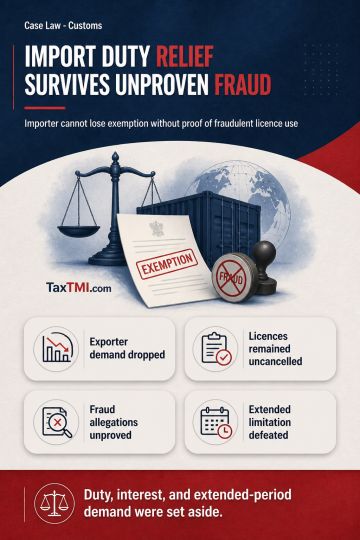
Under the EPCG framework, the Tribunal treated the FTDR Act, Foreign Trade Policy, Handbook of Procedures and Customs notification as an integrated scheme and held that fulfilment of export obligation and validity of EODCs primarily lie with DGFT. Third-party exports were recognised as permissible under the scheme, which is value-based and does not require a rigid one-to-one correlation between imported capital goods and each export consignment. Because the EODCs had been restored by the competent DGFT appellate authority and the alleged fraud was not supported by primary documentary evidence, Customs could not disregard those subsisting determinations or deny EPCG benefits. On the same reasoning, penalties, confiscation and redemption fine were unsustainable.
Under the EPCG framework, the Tribunal treated the FTDR Act, Foreign Trade Policy, Handbook of Procedures and Customs notification as an integrated scheme and held that fulfilment of export obligation and validity of EODCs primarily lie with DGFT. Third-party exports were recognised as permissible under the scheme, which is value-based and does not require a rigid one-to-one correlation between imported capital goods and each export consignment. Because the EODCs had been restored by the competent DGFT appellate authority and the alleged fraud was not supported by primary documentary evidence, Customs could not disregard those subsisting determinations or deny EPCG benefits. On the same reasoning, penalties, confiscation and redemption fine were unsustainable.
Note: It is a system-generated summary and is for quick reference only.
 TaxTMI
 of 4805

















 Join Channel


 TaxTMI