Educational approval requires mandatory State registration, but incidental surplus and trustee-owned land do not prove private benefit or profit motiv...
Judicial review of settlement orders cannot reopen settled customs notices, while statutory interest remains subject to verification and quantificatio...
Customs Broker licence lending for consideration justified revocation where exporter authorisation and client verification obligations were also breac...
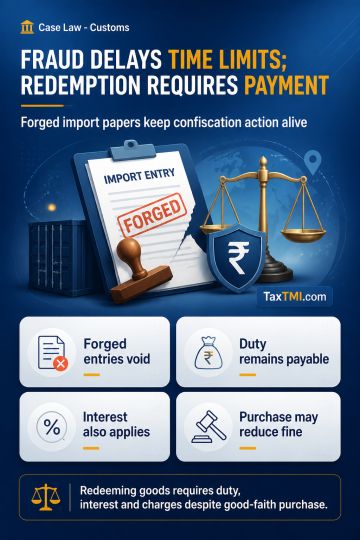
Fraudulent import documents suspend limitation protection, while redemption of confiscated goods requires duty and interest despite bona fide purchase...
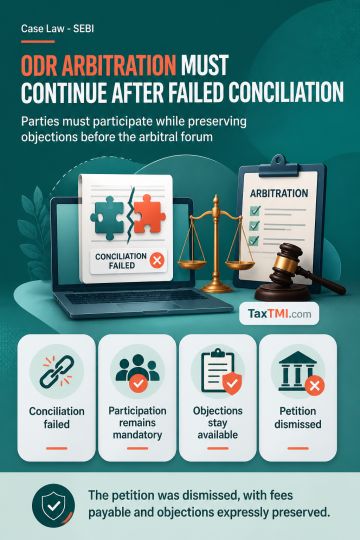
ODR arbitration participation remains mandatory after failed conciliation, while jurisdictional and maintainability objections stay available before t...
Transparency in technical bid evaluation requires disclosed standards and recorded reasons; opaque scoring invalidated tender awards and required fres...
Under the EPCG framework, the Tribunal treated the FTDR Act, Foreign Trade Policy, Handbook of Procedures and Customs notification as an integrated scheme and held that fulfilment of export obligation and validity of EODCs primarily lie with DGFT. Third-party exports were recognised as permissible under the scheme, which is value-based and does not require a rigid one-to-one correlation between imported capital goods and each export consignment. Because the EODCs had been restored by the competent DGFT appellate authority and the alleged fraud was not supported by primary documentary evidence, Customs could not disregard those subsisting determinations or deny EPCG benefits. On the same reasoning, penalties, confiscation and redemption fine were unsustainable.
Under the EPCG framework, the Tribunal treated the FTDR Act, Foreign Trade Policy, Handbook of Procedures and Customs notification as an integrated scheme and held that fulfilment of export obligation and validity of EODCs primarily lie with DGFT. Third-party exports were recognised as permissible under the scheme, which is value-based and does not require a rigid one-to-one correlation between imported capital goods and each export consignment. Because the EODCs had been restored by the competent DGFT appellate authority and the alleged fraud was not supported by primary documentary evidence, Customs could not disregard those subsisting determinations or deny EPCG benefits. On the same reasoning, penalties, confiscation and redemption fine were unsustainable.
Note: It is a system-generated summary and is for quick reference only.
 TaxTMI
  TaxTMI
 of 4809
















 Join Channel