Charitable registration turns on predominant purpose and genuine activities, while incidental fees and related-party rent require supporting adverse m...
MAT book-profit adjustments exclude disallowances for exempt-income expenditure and demerger expenditure unless expressly listed under the statutory c...
Omitted specified domestic transaction provision invalidates related-party expenditure transfer-pricing references and assessments based on consequent...
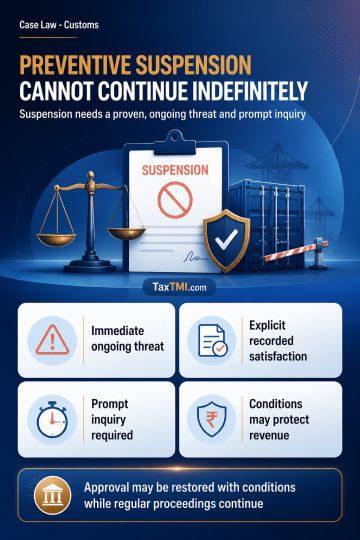
Preventive suspension requires an immediate continuing threat and cannot become indefinite without inquiry, fresh evidence, or proportionate safeguard...
Page of 4805
Press 'Enter' after typing page number.
361 to 380 of 96100 Results
❮
❯
❯❯
0 / 200
Expand Note
Add to Folder
No Folders have been created
+
Are you sure you want to delete "My most important" ?
The Supreme Court held that the 2001 SEBI Circular required disclosure of positions breaching prescribed limits and created no per se prohibition on excess positions; however, the appellant's failure to disclose agency-based trades with twelve entities attracted penalty under the Circular. The futures positions were accepted as valid hedges against intended cash-market sales, because anticipatory hedging was permissible and no 2007 rule required a perfect one-to-one correlation or formal hedging policy. Concentration of open interest, viewed on the correct combined-position basis, did not by itself prove manipulative cornering, and the alleged last-minute cash sale was not shown by cogent material to be price manipulation. Accordingly, PFUTP fraud and disgorgement were set aside, while the disclosure penalty was sustained.
The Supreme Court held that the 2001 SEBI Circular required disclosure of positions breaching prescribed limits and created no per se prohibition on excess positions; however, the appellant's failure to disclose agency-based trades with twelve entities attracted penalty under the Circular. The futures positions were accepted as valid hedges against intended cash-market sales, because anticipatory hedging was permissible and no 2007 rule required a perfect one-to-one correlation or formal hedging policy. Concentration of open interest, viewed on the correct combined-position basis, did not by itself prove manipulative cornering, and the alleged last-minute cash sale was not shown by cogent material to be price manipulation. Accordingly, PFUTP fraud and disgorgement were set aside, while the disclosure penalty was sustained.
Note: It is a system-generated summary and is for quick reference only.
 TaxTMI
 of 4805





















 Join Channel


 TaxTMI