Transfer pricing and tax deductions upheld on established principles, while employee contributions and warranty provisions returned for fresh examinat...
Captive transfer pricing relies on industrial consumer tariffs, while genuine quotations can benchmark effluent treatment transfers under the Other Me...
Specific tariff classification for ophthalmic instruments and extended limitation principles determine the treatment of duty demands, confiscation, an...
Integrated golf function determines classification, placing launch monitors and simulators under other golf equipment rather than measuring instrument...
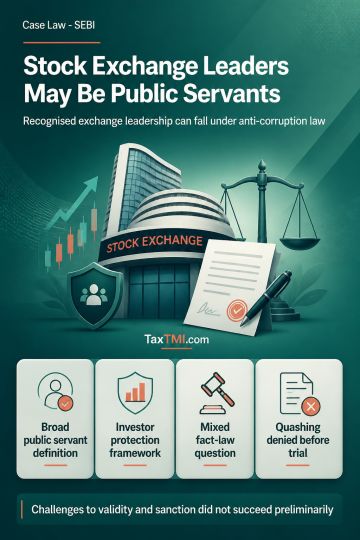
Public servant status under anti-corruption law extends to recognised stock exchange leadership; constitutional and sanction challenges do not succeed...
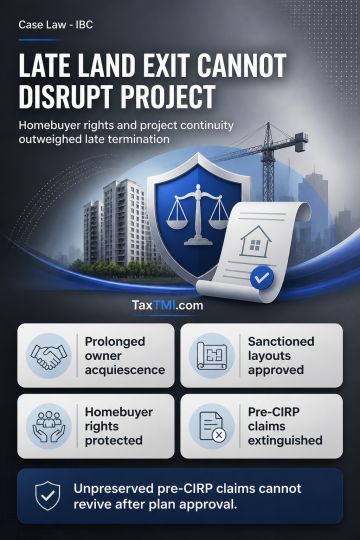
Acquiescence, homebuyer protection and clean-slate resolution principles prevent landowners from disrupting an integrated project through late termina...
The Companies (Corporate Social Responsibility Policy) Amendment Rules, 2026 insert definitions of "Not for Profit Organization" and "zero coupon zero principal instrument" into the CSR Rules, aligning them with SEBI's social stock exchange framework. A new rule permits CSR implementation through such instruments, subject to the expenditure on the instrument not exceeding 10% of a company's total CSR spend for the financial year. A subscribing company is exempt from impact assessment for projects funded through the instrument. The issuing not-for-profit organisation must complete the project within three succeeding financial years and, on delisting, transfer unspent amounts to a Schedule VII fund and report compliance to SEBI. The remaining CSR Rule 4 provisions apply, except sub-rules (5) and (6).
The Companies (Corporate Social Responsibility Policy) Amendment Rules, 2026 insert definitions of "Not for Profit Organization" and "zero coupon zero principal instrument" into the CSR Rules, aligning them with SEBI's social stock exchange framework. A new rule permits CSR implementation through such instruments, subject to the expenditure on the instrument not exceeding 10% of a company's total CSR spend for the financial year. A subscribing company is exempt from impact assessment for projects funded through the instrument. The issuing not-for-profit organisation must complete the project within three succeeding financial years and, on delisting, transfer unspent amounts to a Schedule VII fund and report compliance to SEBI. The remaining CSR Rule 4 provisions apply, except sub-rules (5) and (6).
Note: It is a system-generated summary and is for quick reference only.
 TaxTMI
 of 4803













 Join Channel


 TaxTMI