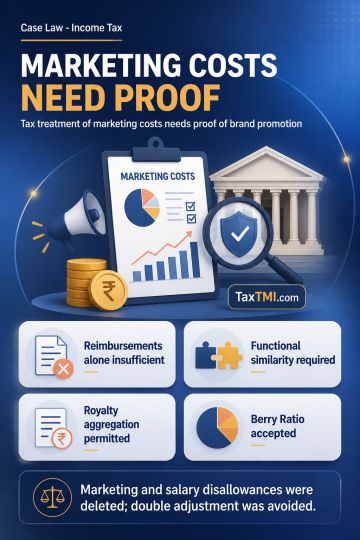
Transfer pricing requires evidence for AMP transactions, functionally reliable comparables, and appropriate aggregation or Berry Ratio benchmarking me...
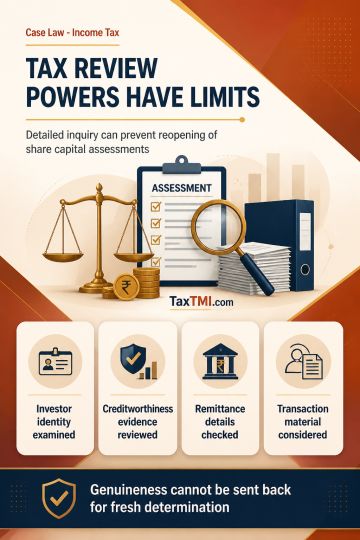
Revisionary jurisdiction cannot reopen share capital assessments where adequate inquiry supports a permissible view and no independent error is establ...
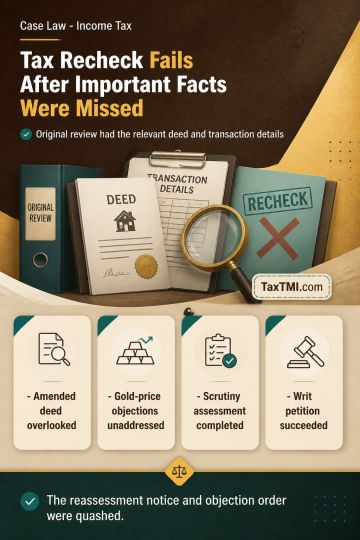
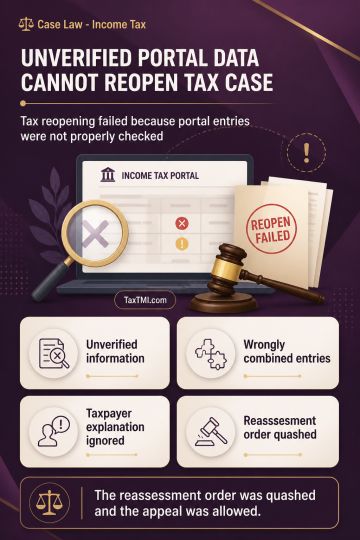
Reassessment jurisdiction fails where unverified portal information is aggregated without examining the taxpayer's explanation or relevance of entries...
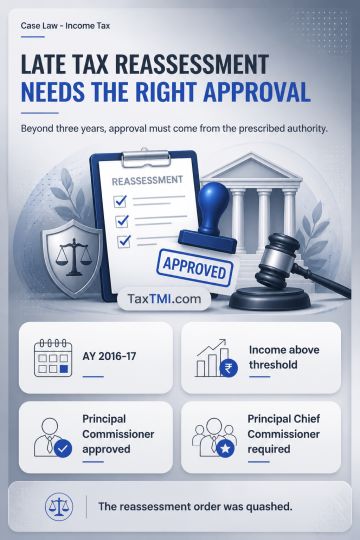
Statutory sanction for delayed reassessment requires approval from the prescribed authority; approval by an inferior authority invalidates jurisdictio...
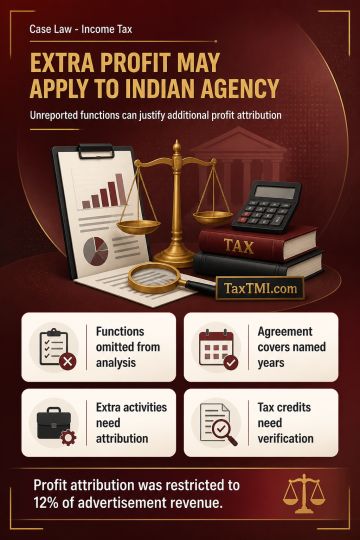
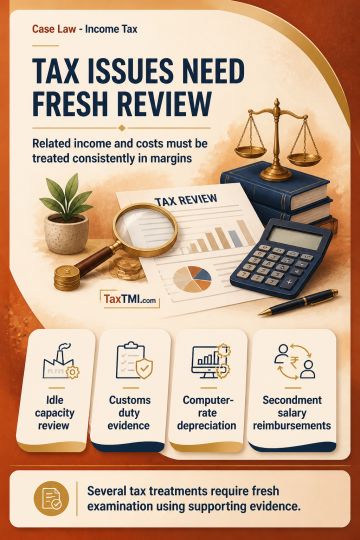
Transfer pricing margin adjustments require matching treatment of non-operating income and related costs, with comparability issues reconsidered on ev...
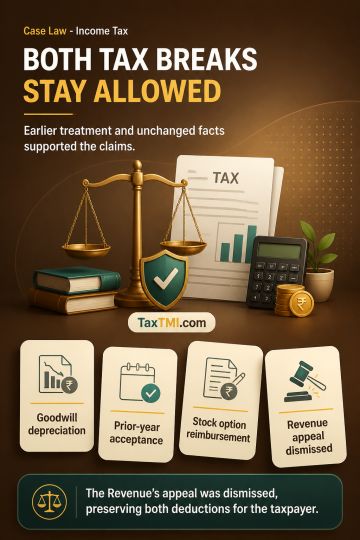
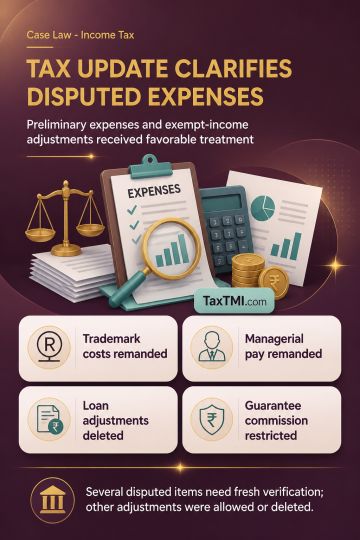
Preliminary-expense amortisation and MAT exempt-income adjustments prevailed, while trademark costs and managerial remuneration require fresh verifica...
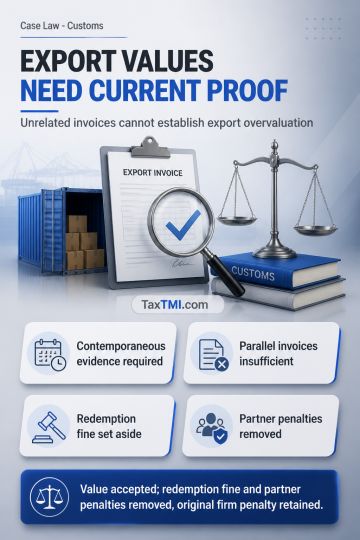
Export valuation requires contemporaneous evidence; unrelated invoices cannot prove overvaluation, and dual penalties on firm and partner are impermis...
The Companies (Corporate Social Responsibility Policy) Amendment Rules, 2026 insert definitions of "Not for Profit Organization" and "zero coupon zero principal instrument" into the CSR Rules, aligning them with SEBI's social stock exchange framework. A new rule permits CSR implementation through such instruments, subject to the expenditure on the instrument not exceeding 10% of a company's total CSR spend for the financial year. A subscribing company is exempt from impact assessment for projects funded through the instrument. The issuing not-for-profit organisation must complete the project within three succeeding financial years and, on delisting, transfer unspent amounts to a Schedule VII fund and report compliance to SEBI. The remaining CSR Rule 4 provisions apply, except sub-rules (5) and (6).
The Companies (Corporate Social Responsibility Policy) Amendment Rules, 2026 insert definitions of "Not for Profit Organization" and "zero coupon zero principal instrument" into the CSR Rules, aligning them with SEBI's social stock exchange framework. A new rule permits CSR implementation through such instruments, subject to the expenditure on the instrument not exceeding 10% of a company's total CSR spend for the financial year. A subscribing company is exempt from impact assessment for projects funded through the instrument. The issuing not-for-profit organisation must complete the project within three succeeding financial years and, on delisting, transfer unspent amounts to a Schedule VII fund and report compliance to SEBI. The remaining CSR Rule 4 provisions apply, except sub-rules (5) and (6).
Note: It is a system-generated summary and is for quick reference only.
 TaxTMI
  TaxTMI
 of 4807





 Join Channel


